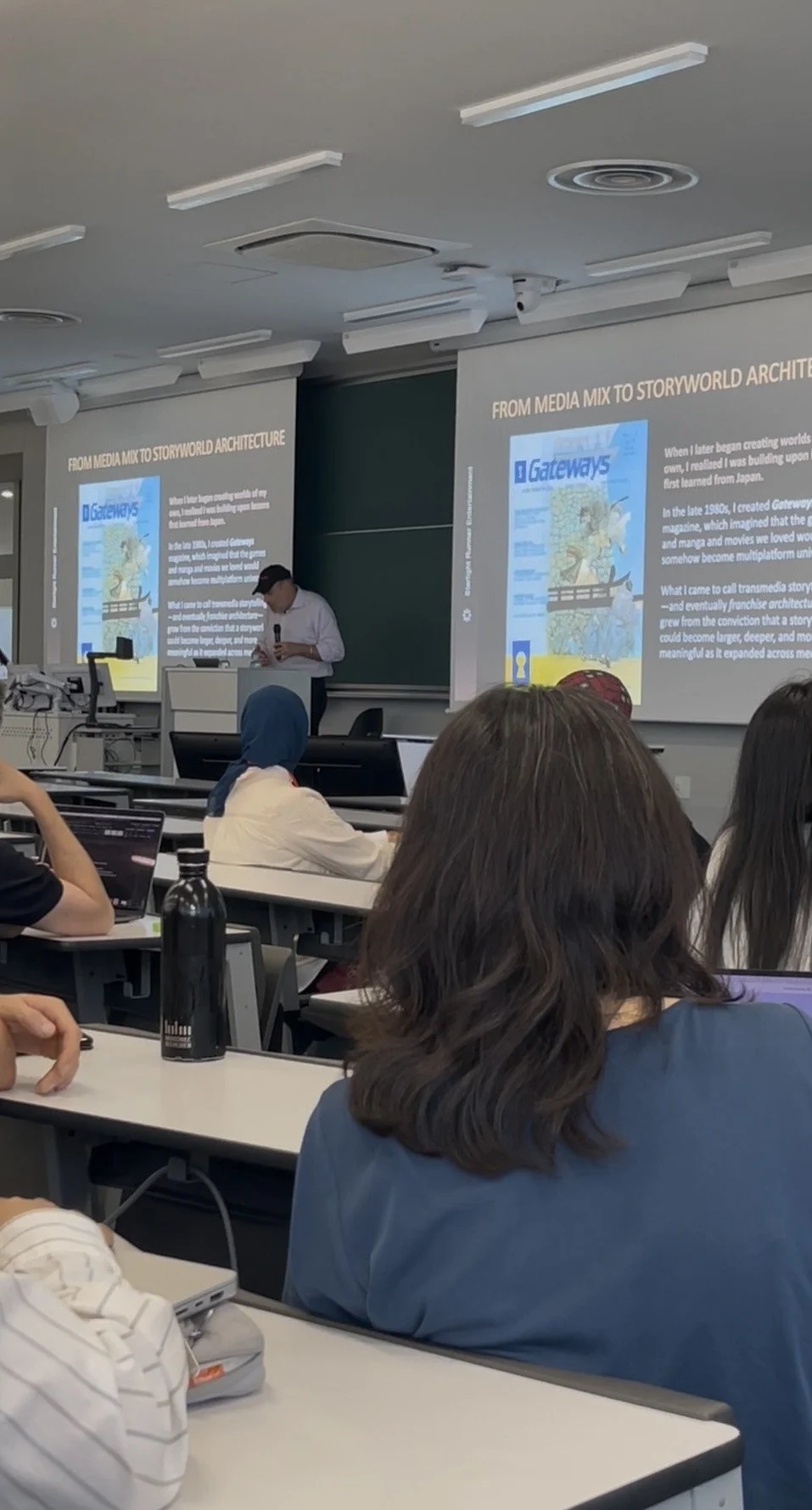
One of the pleasures of this year’s 14th International Replaying Japan Conference was hearing two very different keynote speakers approach questions of storytelling, media, and participation from different directions.
The first keynote, by Jeff Gomez, looked toward the future of storytelling, particularly transmedia, AI and what he calls the “Collective Journey.” His discussion raised much larger questions about how stories become worlds that audiences can actively participate in rather than simply consume. There is much more that I could say about his talk, and perhaps I will return to it separately.
For this post, however, I wanted to linger on the second keynote by Kazuhiko Torishima, partly because so much of what he discussed intersected directly with my own interest in manga. What struck me most was how his talk encouraged us to think about manga not simply as a finished work, but as something produced through communication, feedback, and time.
The Mangaka and the Editor
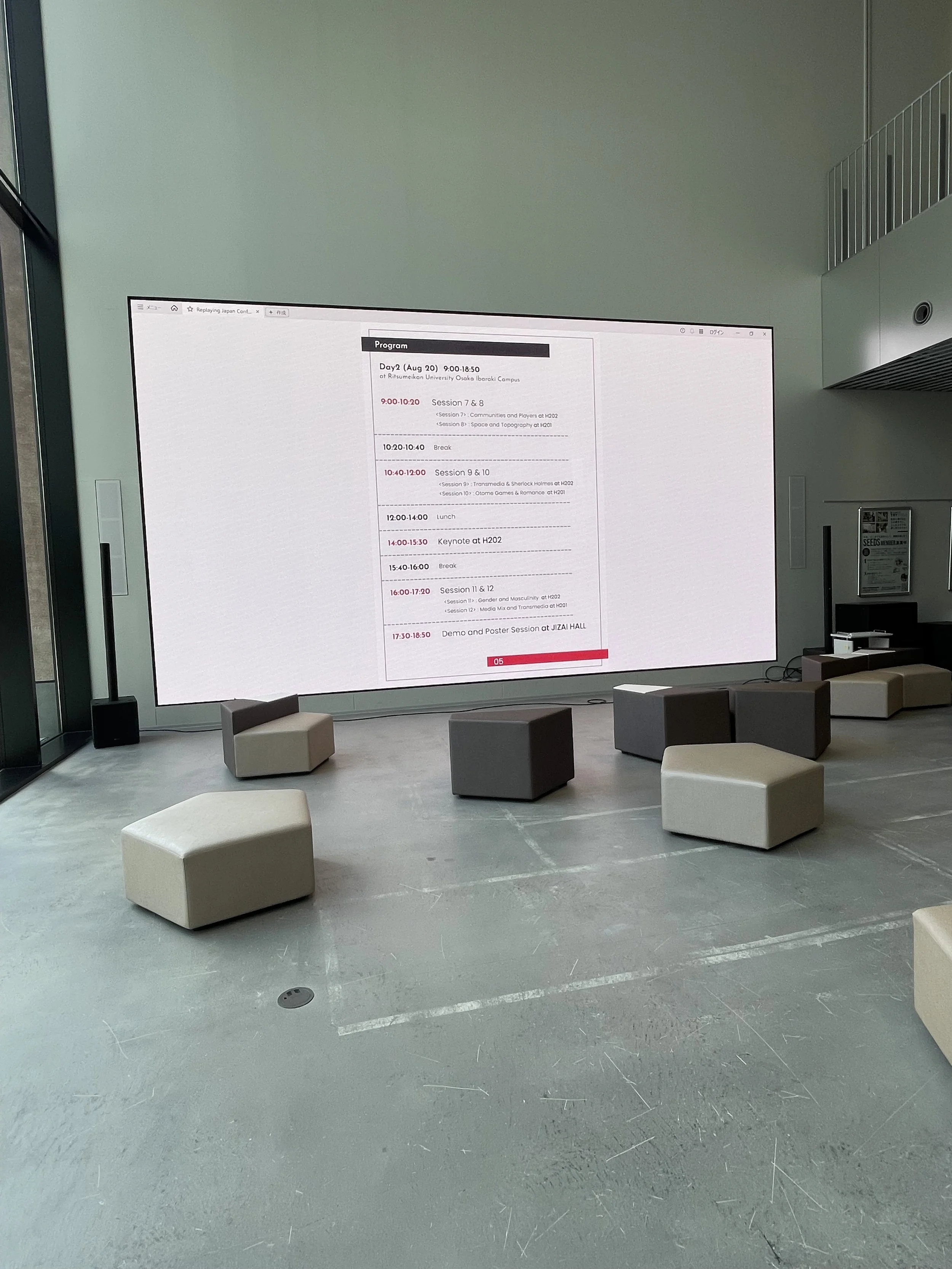
One of Torishima’s most memorable points concerned the relationship between the mangaka and their editor.
He recalled speaking with Akira Toriyama for around fifteen minutes every day while working with him. Sometimes these conversations were simply a way of checking in and seeing how things were going.
That small detail stayed with me because it reveals just how involved the editor can be in the creative process. The editor is not simply someone who corrects or approves a manuscript. Torishima described a role that also involved maintaining the conditions under which the mangaka could continue producing work. Given how closely he and Toriyama worked together over so many years, I could not help but think about Toriyama’s passing and what that loss must have meant to him personally.
That responsibility could even mean shielding the creator from unnecessary stress. Negative comments, for example, did not always need to be passed directly on to the artist. The editor could act as a kind of buffer between the mangaka and the pressures surrounding publication.
Manga Created “Live”
Torishima also spoke about the intensely competitive environment surrounding Weekly Shōnen Jump.
New artists were important to the magazine, but new series also had to prove themselves very quickly. He mentioned a period of roughly ten weeks in which reader response could help determine whether a manga would continue. And, Jump was constantly gathering information from its readers.
Children mailed in postcards indicating which manga they enjoyed, as well as information about their other media interests. What surprised me was the speed of that feedback loop: Jump appeared on Monday, and reader postcards could begin arriving as early as Tuesday.
This led to probably my favorite idea from the keynote.
Torishima described manga as being created almost “live.”
The story was already being published while the mangaka and editor continued making decisions about where it would go. Rankings changed. Readers responded. Characters became more or less popular. Another chapter had to be produced.
Rather than seeing that instability as a weakness, Torishima presented it as one of manga’s strengths: it could respond. When we read a completed manga years later, everything can feel inevitable. We know which characters became iconic and where the story eventually ended. But during serialization, none of that was necessarily certain.
Manga and Media Time
Another fascinating part of the keynote concerned television.
Torishima discussed how television helped organize everyday schedules in Japan. A program aired at a specific time, which meant viewers needed to structure part of their day around being home to watch it.
The more I thought about his keynote, the more I realized how much of it was really about time.
The Monday publication of Jump
The Tuesday arrival of reader postcards
The weekly chapter
The daily fifteen-minute phone call
The ten-week survival period for a new manga
The television program airing at the same time each week
Manga production existed within all of these overlapping rhythms of media, work, and everyday life.
Publishers, Fans, and Dōjinshi
One final point especially caught my attention at a conference devoted to games and transmedia.
Torishima contrasted the manga industry’s treatment of fan works with approaches taken within the video game industry. Manga publishers, he explained, have often tolerated dōjinshi using copyrighted characters and properties.
He described publishers as essentially “closing one eye.”
Why?
Because, as he put it, publishers and fans are ultimately on the same team.
I love this idea.
It suggests a relationship with fan creativity that is not necessarily oppositional. Fans may be creating unofficial derivative works, but they are also sustaining communities, enthusiasm, and investment in manga culture. The commercial industry and fan culture exist within the same larger ecosystem.
And perhaps that idea connects back to everything else Torishima discussed.
By the end of the keynote, I found myself thinking less about manga as a stable object sitting on a bookshelf and more about manga as an ongoing process—one shaped by people constantly communicating, responding, and creating alongside one another.
That is probably why Torishima’s description of manga being made “live” has stayed with me the most.
Note: These reflections are based on notes I took during the keynote at the Replaying Japan conference. They are not intended as a complete transcript, but rather as a record of the points and ideas that stood out to me during the talk.
[日本語版]
「ライブ」で作られるマンガReplaying Japanを振り返って
今年開催された第14回 Replaying Japan 国際ゲーム研究カンファレンスでは、ストーリーテリング、メディア、そしてオーディエンスの参加というテーマについて、まったく異なる角度から語る二人の基調講演者のお話を聞く機会に恵まれました。
最初の基調講演者であるジェフ・ゴメス(Jeff Gomez)氏は、トランスメディアやAI、そして彼が「Collective Journey(集合的な旅)」と呼ぶ考え方を通して、ストーリーテリングの未来について語りました。物語は単に受け取るものではなく、オーディエンスが実際に参加できる「世界」へとどのように広がっていくのか。彼の講演からは、そんな大きな問いが浮かび上がってきました。この講演についても書きたいことはたくさんあるので、また別の機会に改めて取り上げるかもしれません。
今回のブログでは、二人目の基調講演者である鳥嶋和彦氏のお話について、もう少しじっくり振り返ってみたいと思います。というのも、鳥嶋氏が語られた内容の多くが、私自身のマンガ研究とも直接重なるものだったからです。
特に印象に残ったのは、マンガを単なる「完成された作品」として見るのではなく、コミュニケーション、読者からの反応、そして時間の流れのなかで生み出されていくものとして捉える視点でした。
マンガ家と編集者
鳥嶋氏のお話のなかでも特に印象的だったのが、マンガ家と編集者との関係についてです。
鳥山明先生と仕事をしていた頃、鳥嶋氏は毎日15分ほど電話で話をしていたそうです。ときには、単純に「今日はどう?」と近況を確認するような会話もあったといいます。
この何気ないエピソードが、とても心に残りました。
編集者というと、原稿をチェックしたり修正を求めたりする存在というイメージを持ちがちですが、鳥嶋氏が語った編集者の役割はそれだけではありません。マンガ家が継続して作品を生み出していけるよう、その環境そのものを支えることも編集者の仕事だったのです。長年にわたって鳥山先生とこれほど密接な関係を築いてこられたことを思うと、鳥山先生が亡くなられたことが鳥嶋氏にとってどれほど大きな喪失だったのだろう、と講演を聞きながら思わず考えてしまいました。
マンガ家を支えるということは、ときには不必要なストレスから作家を守ることでもあったそうです。
たとえば、読者から届いた否定的な意見をすべてそのままマンガ家本人に伝える必要はありません。編集者がそれを受け止め、作家と出版を取り巻くさまざまなプレッシャーとの間に立つ、いわば「緩衝材」のような役割を担うこともあったといいます。
「Live」で作られるマンガ
鳥嶋氏は、『週刊少年ジャンプ』を取り巻く非常に競争の激しい環境についても語りました。
新人マンガ家を積極的に起用することは『ジャンプ』にとって重要でしたが、新連載はごく短期間のうちに結果を出さなければなりません。
鳥嶋氏によれば、読者からの反応を見ながら、その作品を継続するかどうかを判断する期間は、およそ10週間だったそうです。
そして『ジャンプ』は、常に読者についての情報を集めていました。
子どもたちはハガキを送り、自分が好きなマンガだけでなく、普段どのようなテレビ番組を見ているかなど、ほかのメディアに関する興味についても答えていました。
私が驚いたのは、そのフィードバックの速さです。
『ジャンプ』が月曜日に発売されると、早ければ翌日の火曜日には、読者からのハガキが編集部に届き始めたそうです。
そして、ここから今回の基調講演で私が最も気に入った話につながります。
鳥嶋氏は、マンガはある意味で「ライブ」で作られている、と表現しました。
物語はすでに連載され、読者の手に届いている。その一方で、マンガ家と編集者は、その先のストーリーをどう展開していくのかを考え続けています。
人気順位は変わります。
読者から反応が届きます。
あるキャラクターの人気が思いがけず高くなったり、逆にそうならなかったりもします。
それでも、次の週にはまた新しい一話を完成させなければなりません。
鳥嶋氏は、この不安定さを弱点としてではなく、むしろマンガの強みの一つとして捉えていました。
マンガは、反応することができるのです。
何年も経ってから完結したマンガを読むと、その物語は最初からその結末へ向かうように作られていたかのように感じることがあります。どのキャラクターが人気者になったのかも、その物語が最終的にどこへたどり着いたのかも、私たちはすでに知っています。しかし連載されていた当時、それらは決して最初から決まっていたわけではありません。
マンガと「メディアの時間」
もう一つ興味深かったのは、テレビについてのお話です。
鳥嶋氏は、テレビが日本人の日常生活に一定の時間的なリズムを与えるようになったことについて触れていました。
テレビ番組は決められた時間に放送されます。
「この番組はこの時間に始まるから、その時間には家に帰って見よう」
そう考えることで、人々は自分の一日の一部をテレビ番組の放送時間に合わせて組み立てるようになります。
講演について考えれば考えるほど、実は鳥嶋氏のお話のかなりの部分が「時間」についてだったのではないかと思うようになりました。
月曜日に発売される『ジャンプ』。
火曜日には届き始める読者ハガキ。
毎週の新しい一話。
毎日15分の電話。
新連載に与えられる約10週間。
毎週、同じ時間に放送されるテレビ番組。
マンガの制作は、こうしたメディア、仕事、そして日常生活のさまざまな時間のリズムが重なるなかで行われていたのです。
出版社、ファン、そして同人誌
ゲームやトランスメディアをテーマとするカンファレンスだったこともあり、最後にもう一つ、とても印象に残った話があります。
それは、ファンによる二次創作に対するマンガ業界とゲーム業界の姿勢の違いについてです。
鳥嶋氏によれば、マンガ出版社はこれまで、既存作品のキャラクターや設定を用いた同人誌について、ある程度寛容な態度を取ってきました。
その姿勢を、鳥嶋氏は「片目をつぶる」と表現していました。
では、なぜ出版社はそうするのでしょうか。
鳥嶋氏の言葉を借りれば、出版社とファンは、結局のところ「同じチーム」だからです。
私は、この考え方がとても好きです。
ファンによる創作活動と商業的な出版活動の関係を、必ずしも対立するものとして捉える必要はないということだからです。
ファンが作るものは非公式な二次創作かもしれません。しかし、その活動は作品をめぐるコミュニティを維持し、熱意を生み出し、マンガ文化への関心を長く支え続けることにもつながります。
商業的なマンガ業界とファン文化は、別々に存在しているのではなく、同じ大きな文化的なエコシステムのなかにあるのかもしれません。
そして、この考え方は、鳥嶋氏が講演全体を通して語っていたことにもつながっているように思います。
講演を聞き終えたとき、私はマンガを本棚に並ぶ一つの完成された「物」として見るよりも、むしろ、人々が絶えずコミュニケーションを取り、反応し合い、ともに何かを作り続けるなかで生まれていく「プロセス」として考えるようになっていました。
だからこそ、鳥嶋氏が語った、マンガは「ライブ」で作られるという言葉が、今でも一番強く心に残っているのだと思います。
※この文章は、Replaying Japanの基調講演を聞きながら私自身が取ったメモをもとにまとめたものです。講演内容の完全な記録や逐語的な書き起こしを意図したものではなく、私自身が特に印象に残った点や、そこから考えたことを振り返るために書いています。