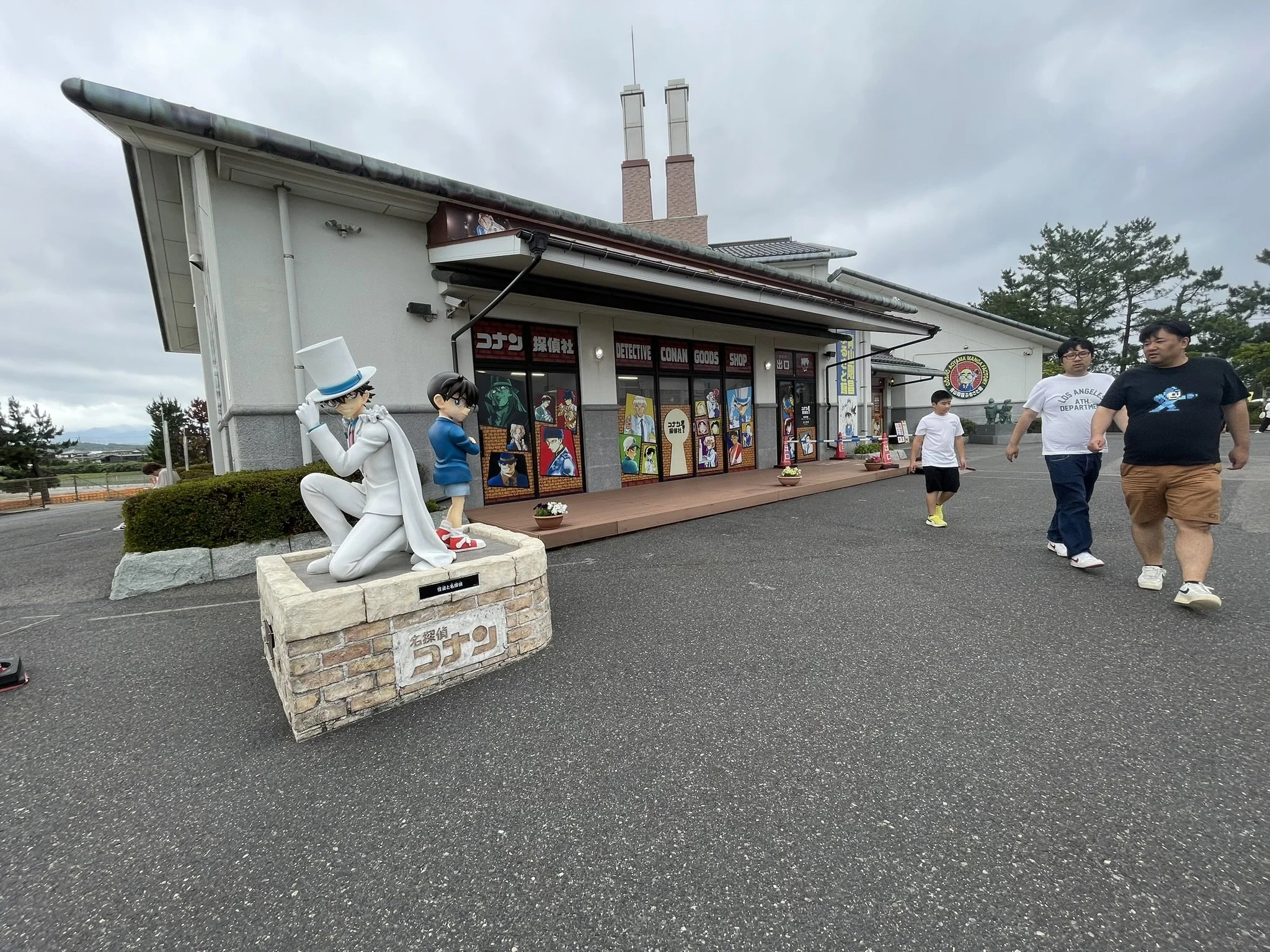
It’s been a little while since I last wrote here. One of the strange things about academic life is that it can be surprisingly difficult to find time to write about research outside of the things that have to be written—articles, chapters, conference papers, teaching materials and everything else that somehow fills the calendar.
This summer, I was fortunate to spend June through August in Japan as a visiting researcher, returning to New York on August 25. Now that I’m back (and slowly getting ready for another semester!), I finally have a little space to reflect on some of the places I visited and experiences I had along the way.
And I thought I would start with one that had been on my list for a very, very long time. There are some places you visit because they happen to fit into your itinerary. And then there are places you have wanted to visit for so long that finally getting there feels a little unreal.
For me, the Gōshō Aoyama Manga Factory (青山剛昌ふるさと館) in Hokuei, Tottori Prefecture was definitely one of those places.
As someone who has spent a rather ridiculous amount of my academic life thinking, writing and talking about detectives (lol), visiting Gōshō Aoyama’s hometown has been on my list for years. Detective Conan has been enormously important to my research on Japanese detective manga, but it is also simply a series that I love. So finally arriving in Hokuei felt a little like completing a detective pilgrimage.
What surprised me most, though, was that the experience begins long before you enter the museum.
The town itself has become part of the Detective Conan world.
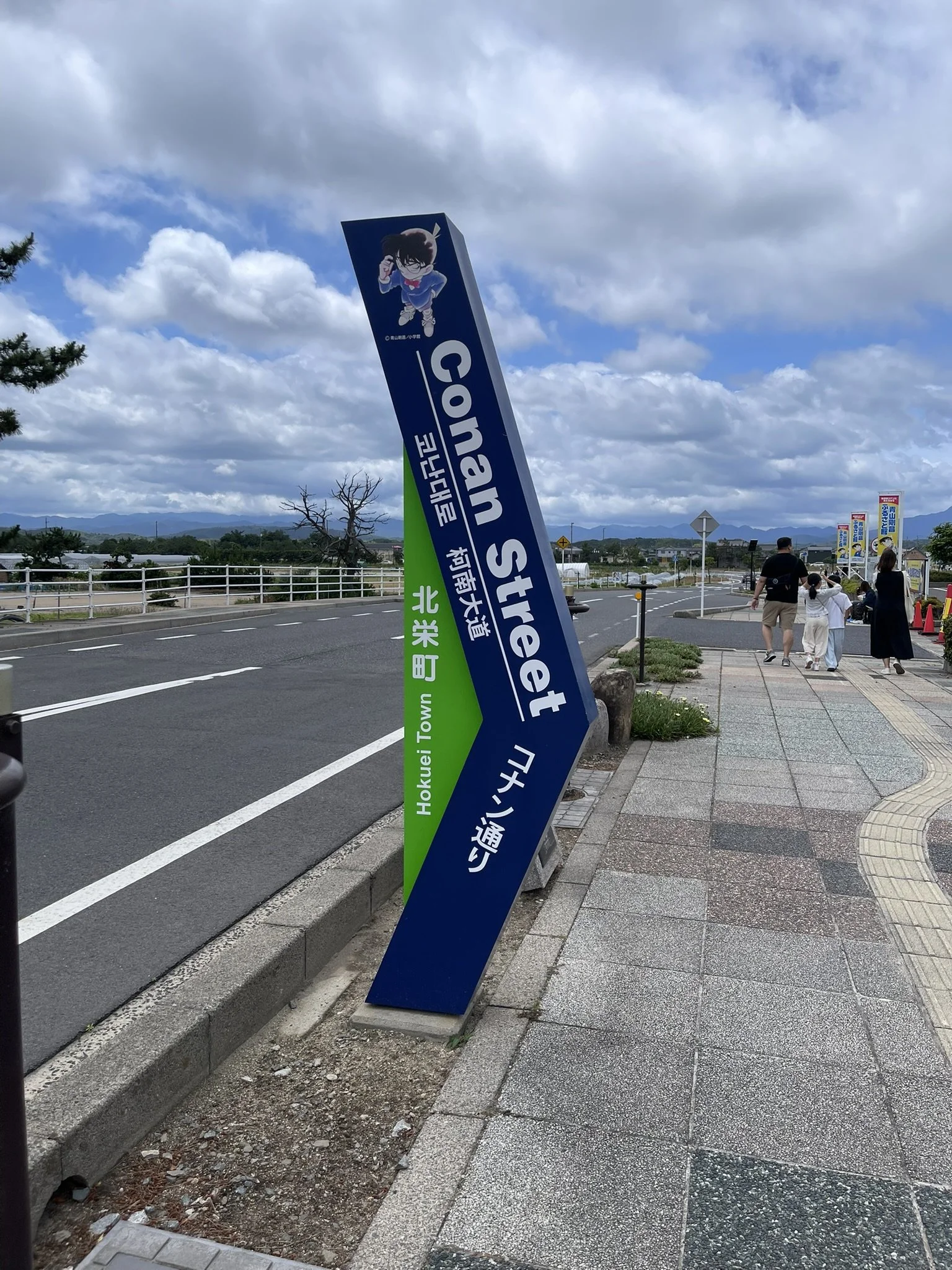
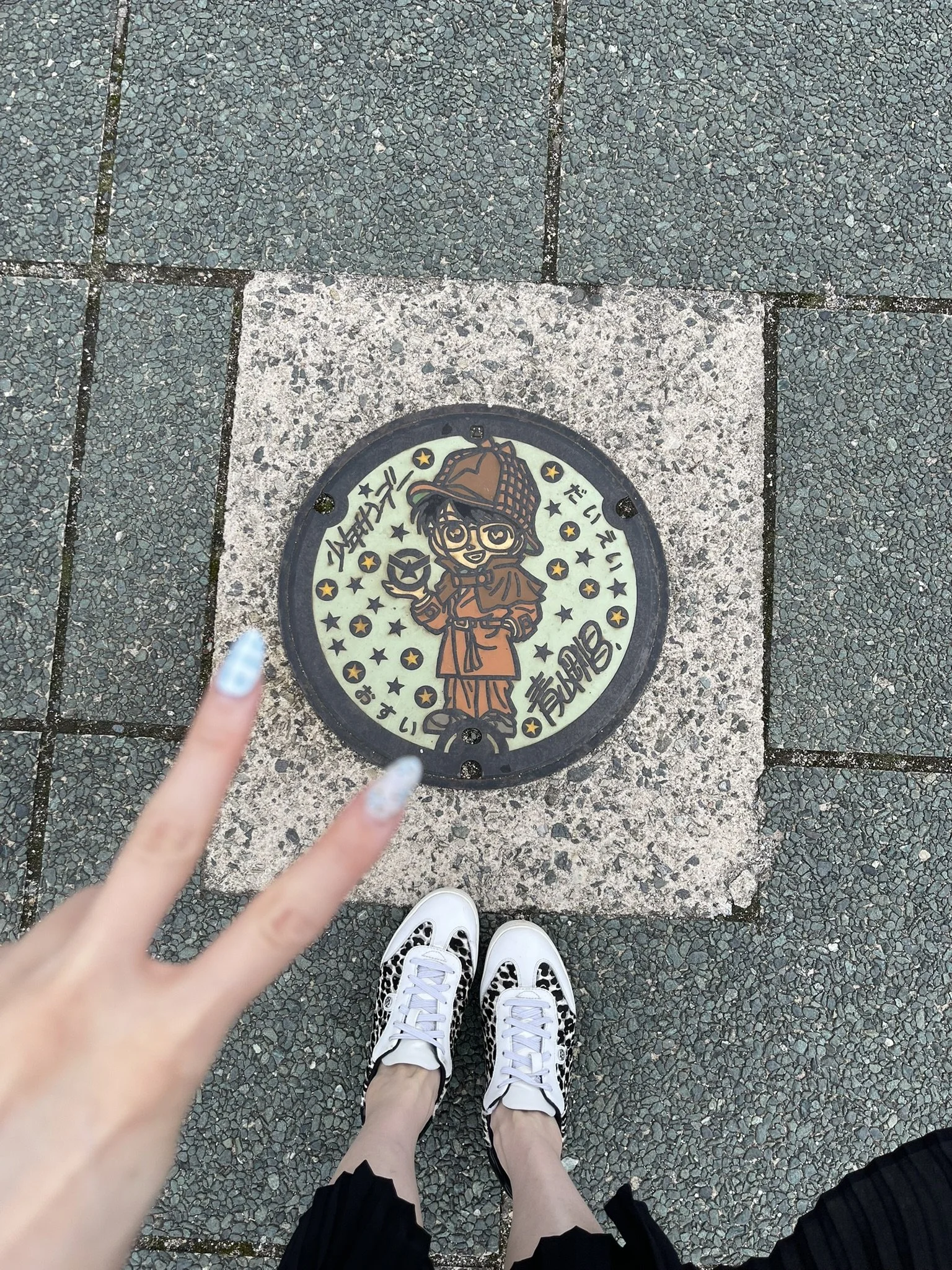
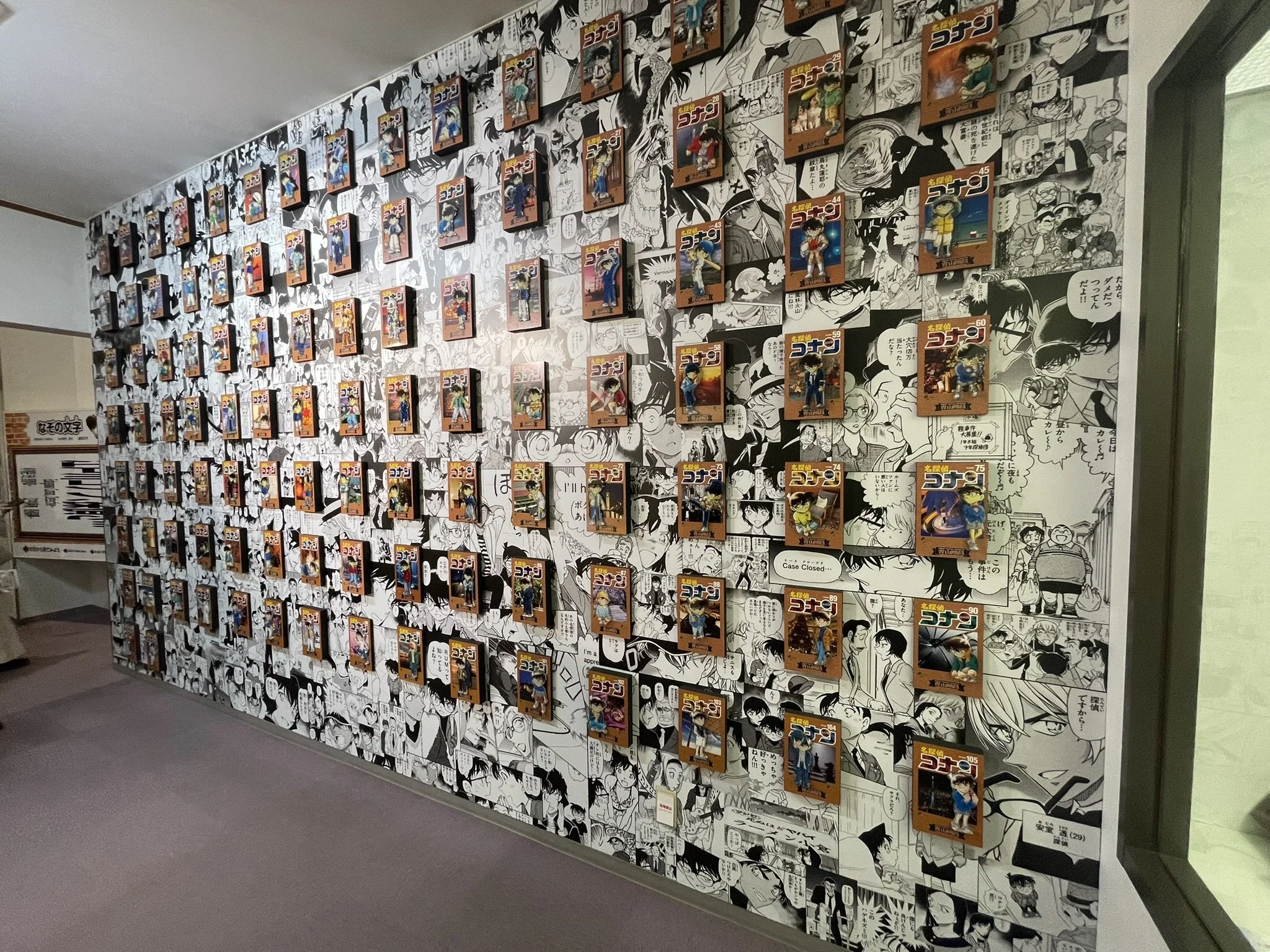
One of the main routes through Hokuei is Conan Street, where you encounter bronze statues, character signs, manhole covers and stone monuments depicting covers from the manga. Naturally, I took far too many pictures.
Walking through the town becomes its own little game of discovery: Who will I find next? What reference will appear around the corner?
And honestly, what could be more appropriate for a detective series? Detection is already about moving through space, noticing details, finding clues and recognizing things that others might overlook. Here, the tourist is asked to do something strangely similar.
The museum is only one part of a much larger Conan landscape. There is the Gōshō Aoyama Manga Factory itself, Conan Bridge, Conan’s House Beika Shopping Street, the tourist information center, the roadside station and numerous characters and references scattered throughout Hokuei. There are even more places I didn’t manage to visit this time, including Conan Station, the Hokuei Town Library and Tottori Sand Dunes Conan Airport.
It is fascinating to see just how deeply one manga franchise has become woven into the identity of a real town. Of course, I am apparently incapable of going somewhere like this without turning it into a research question 😂
Tourism scholars Kyungjae Jang and Sangkyun Kim use the term “imagined playscapes” to describe tourism spaces where fictional media, physical places, tourism design and visitor participation come together. I kept thinking about that concept while walking around Hokuei.
You aren’t simply looking at Detective Conan objects.
You participate.
You pose beside Conan. You search for characters. You photograph manga covers. You cross Conan Bridge. You enter a recreation of Beika Shopping Street. You buy something from the gift shop that you definitely did not need but obviously had to have.
The fictional world and the physical town begin to overlap.
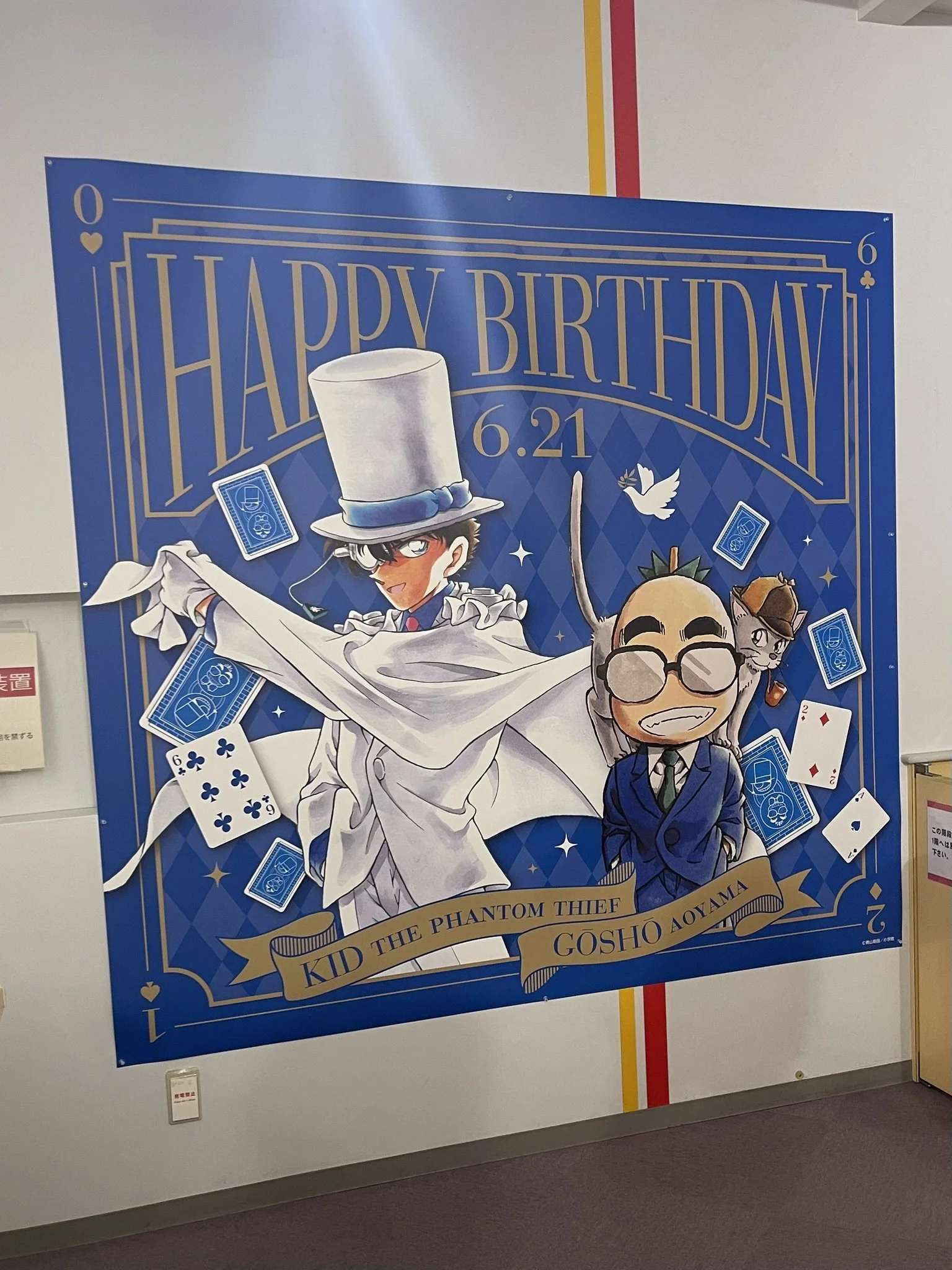
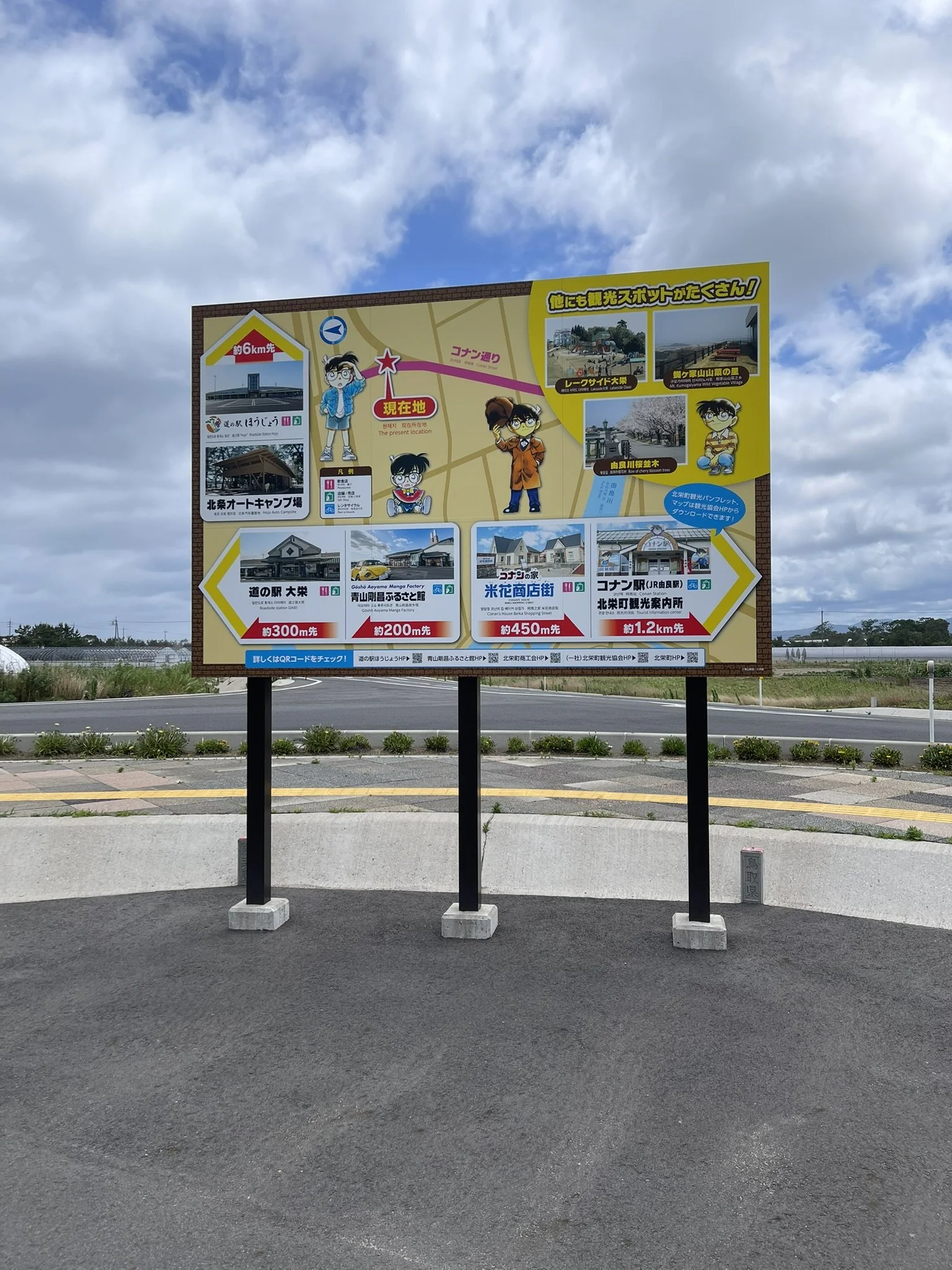
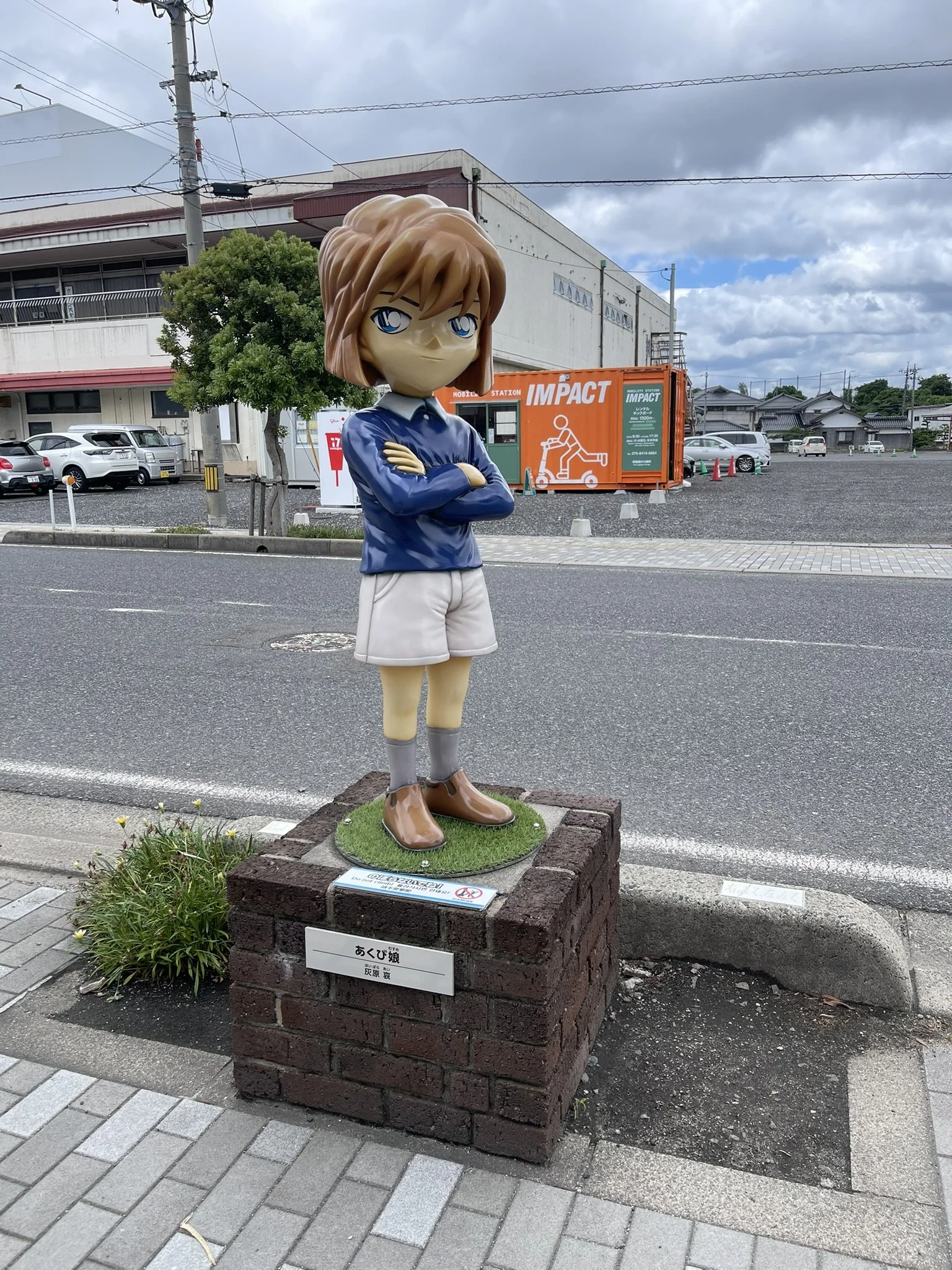
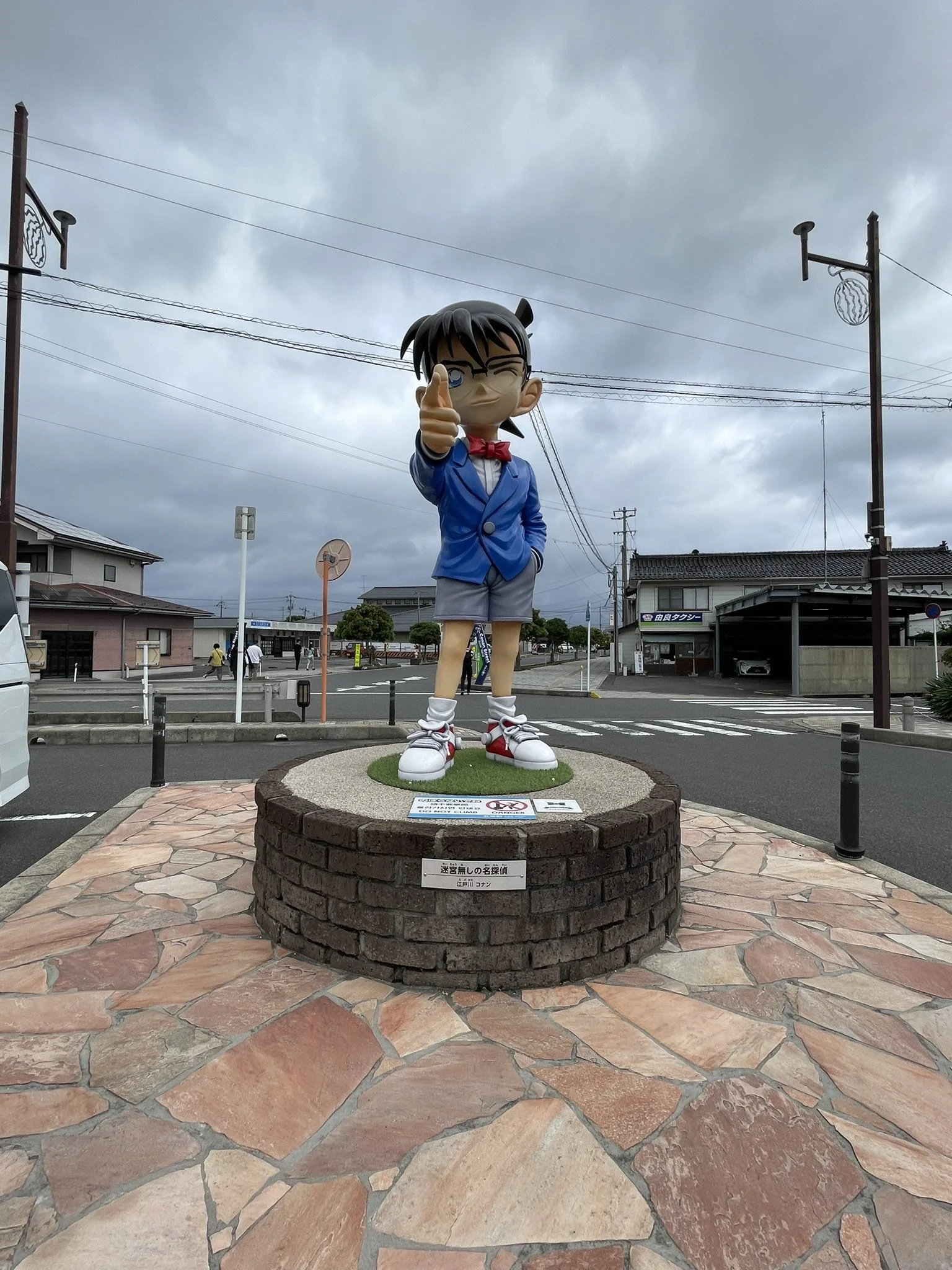
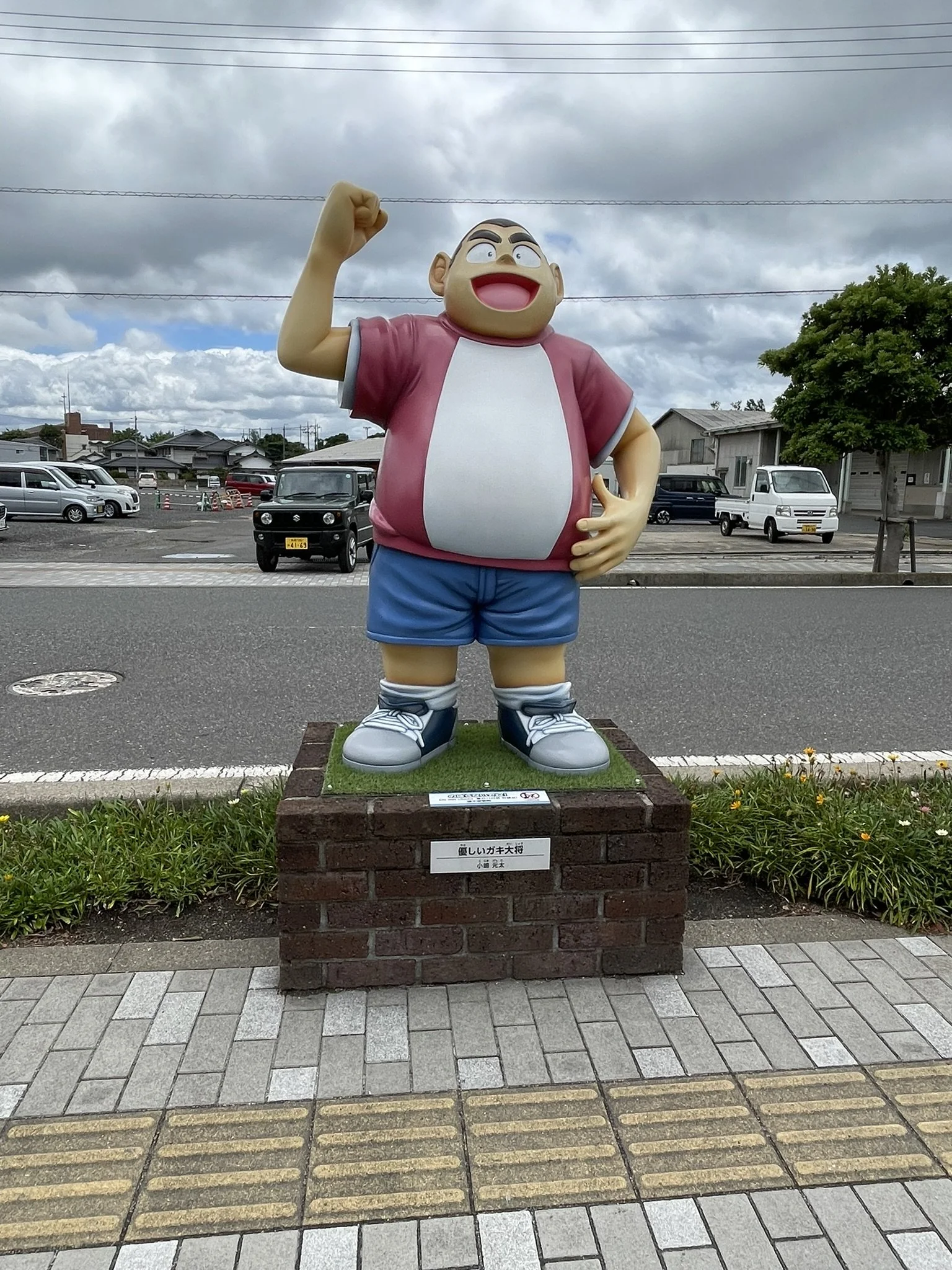
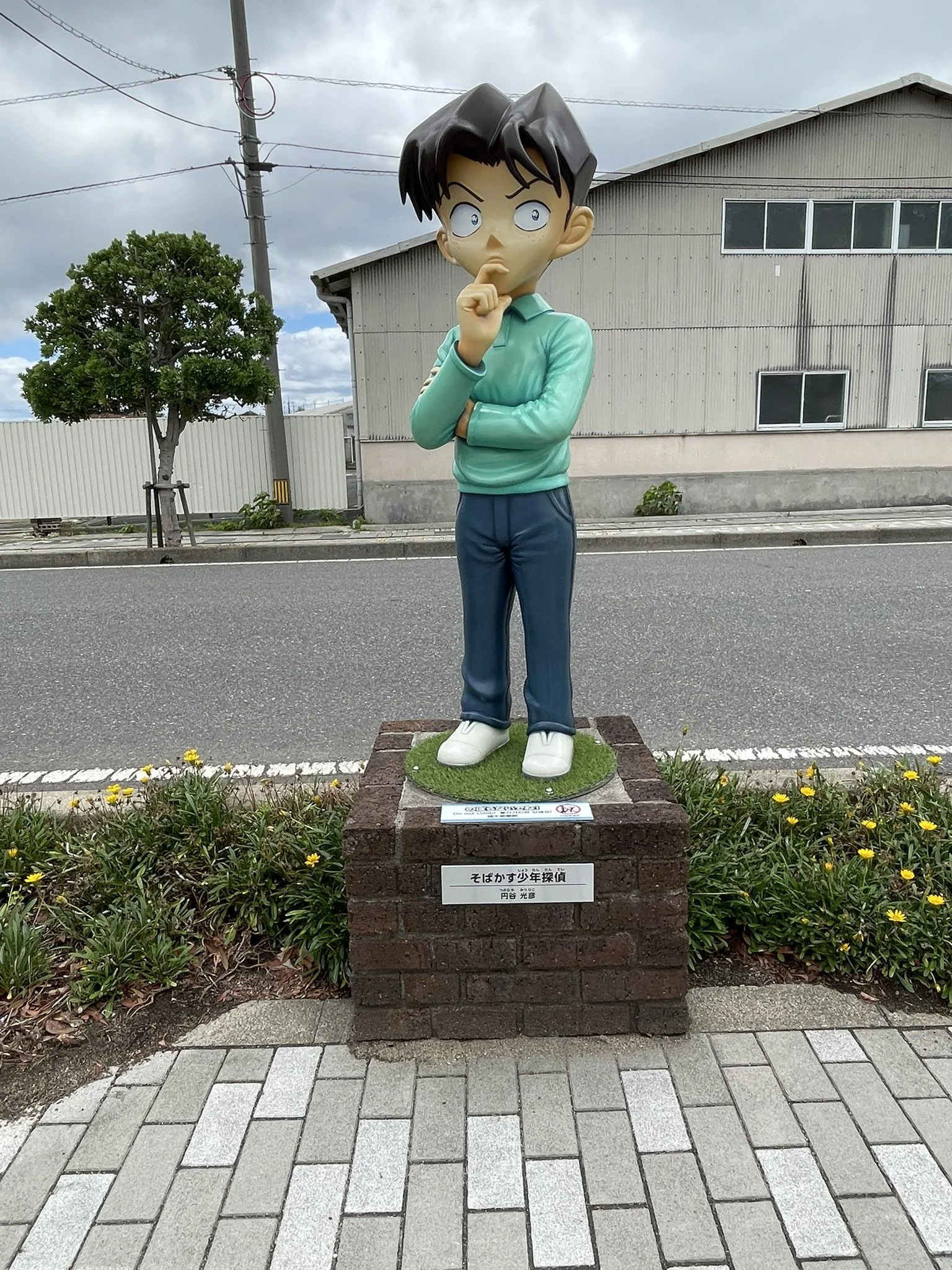
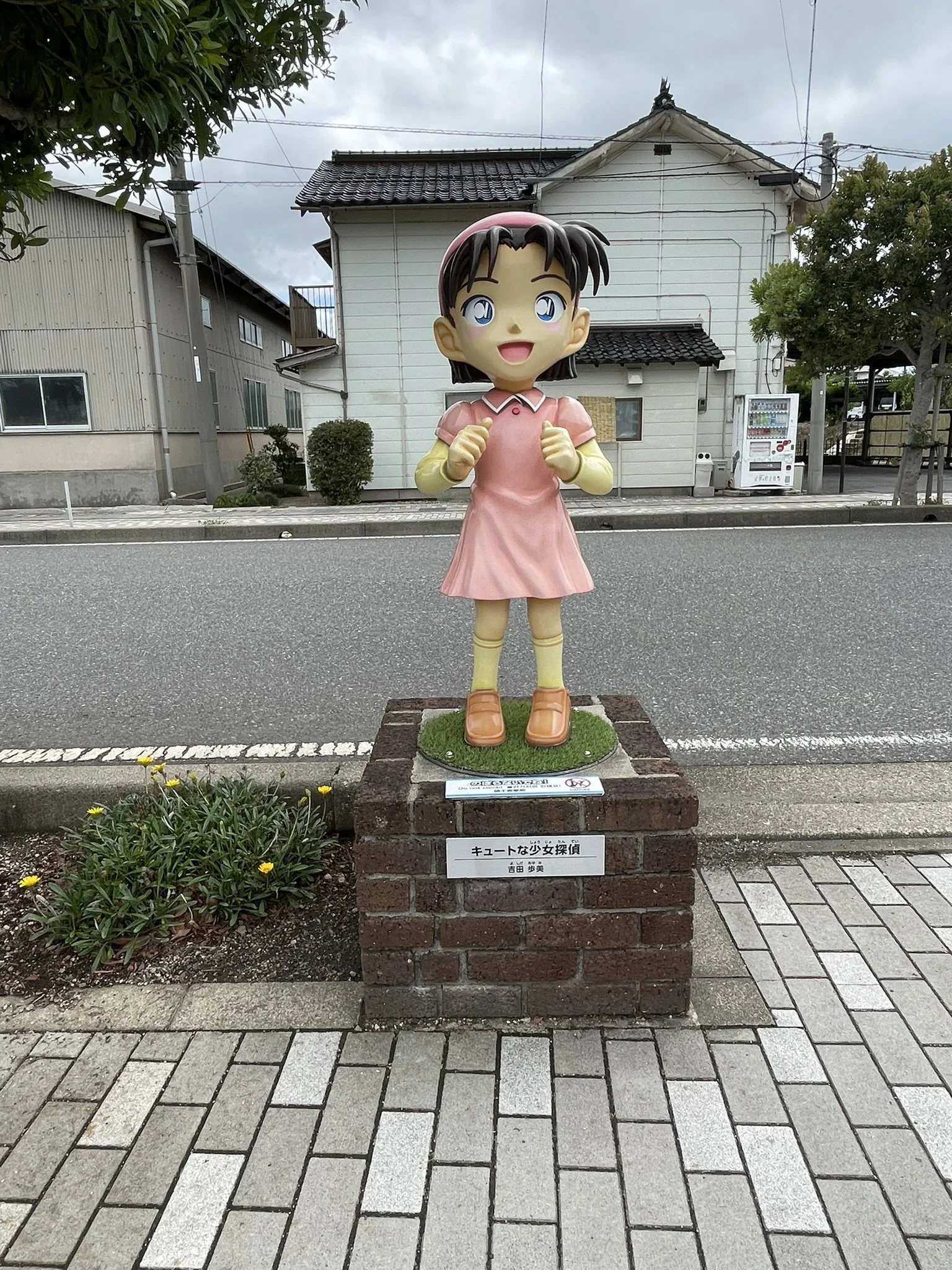
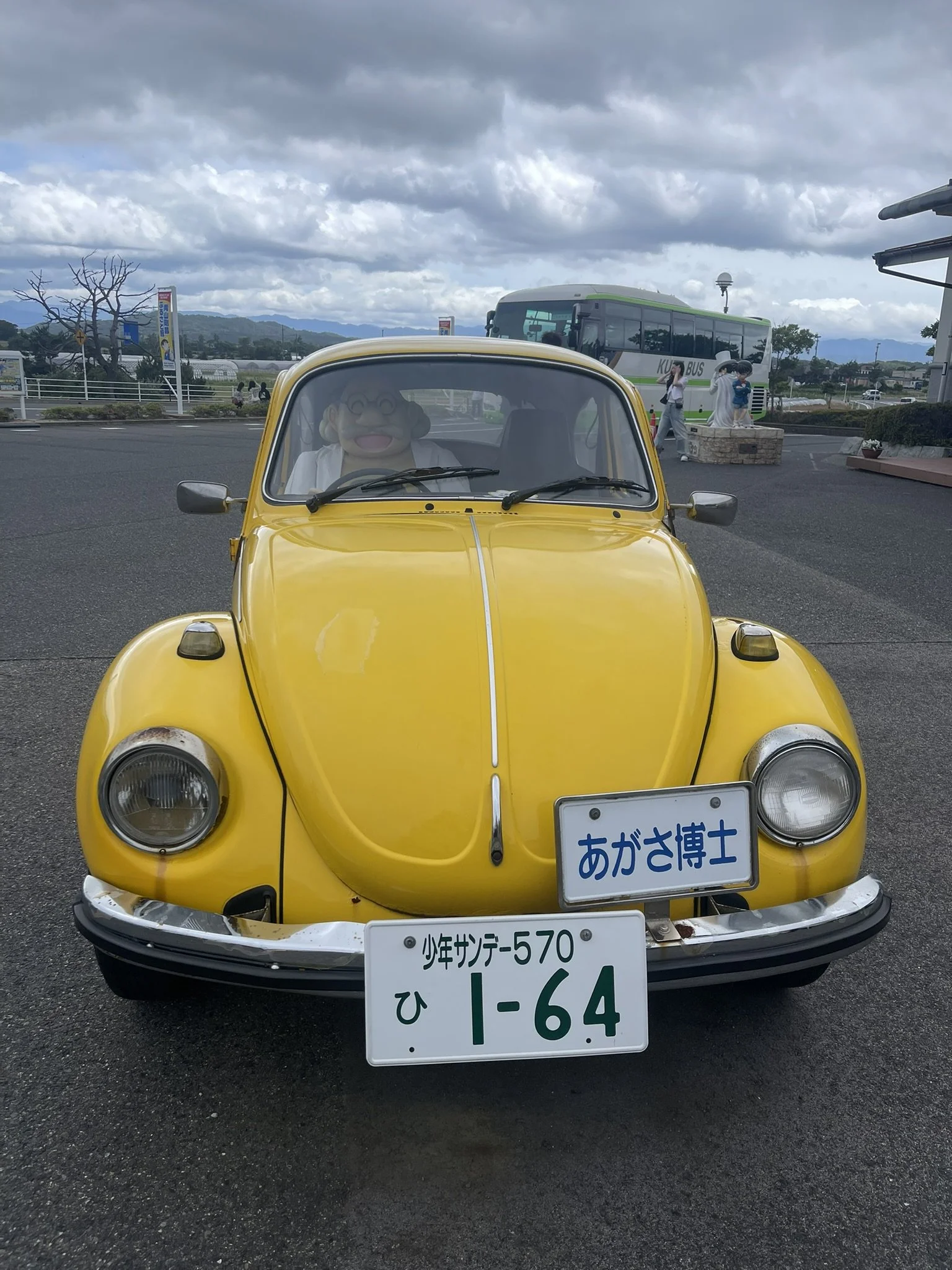
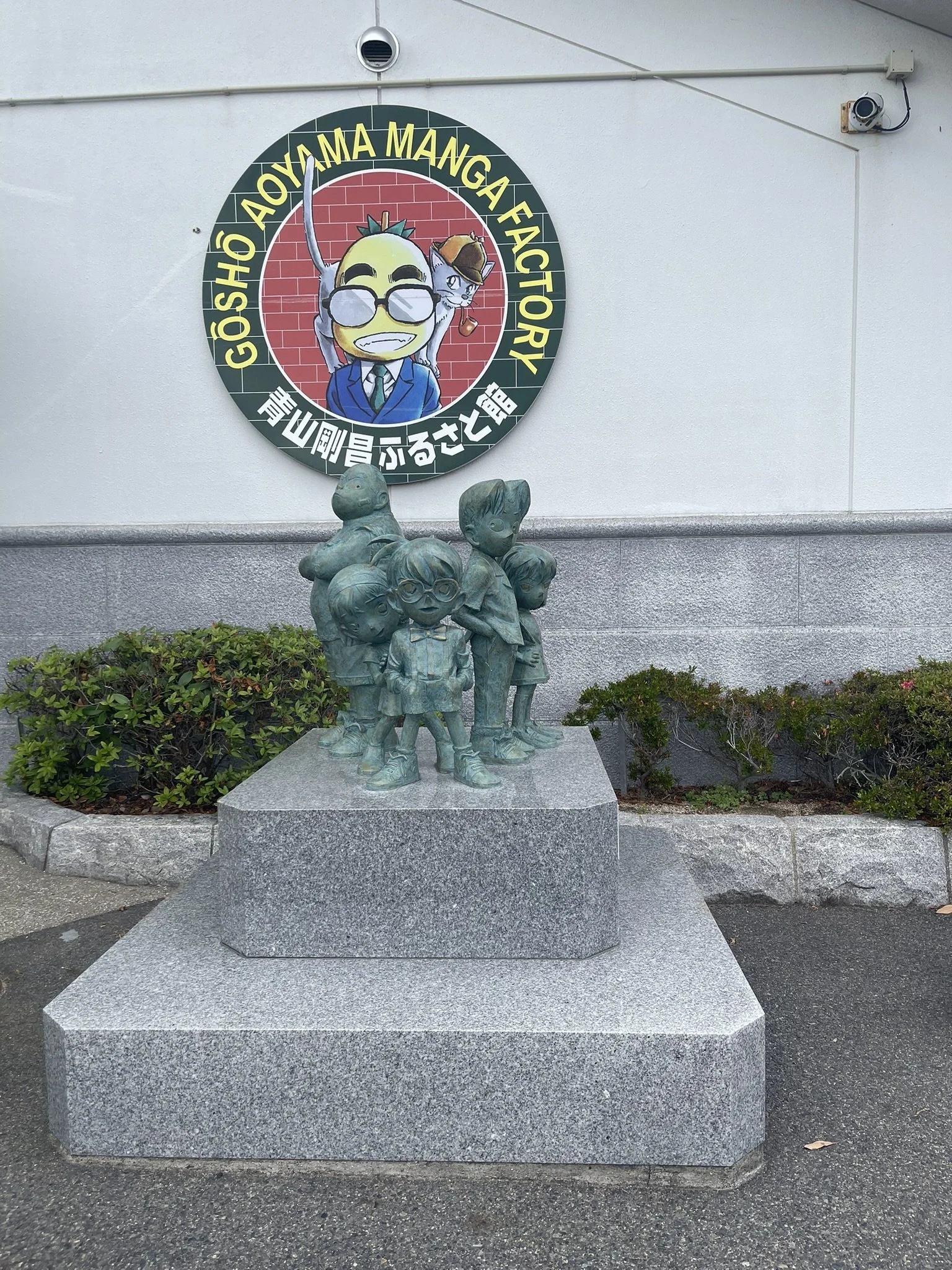
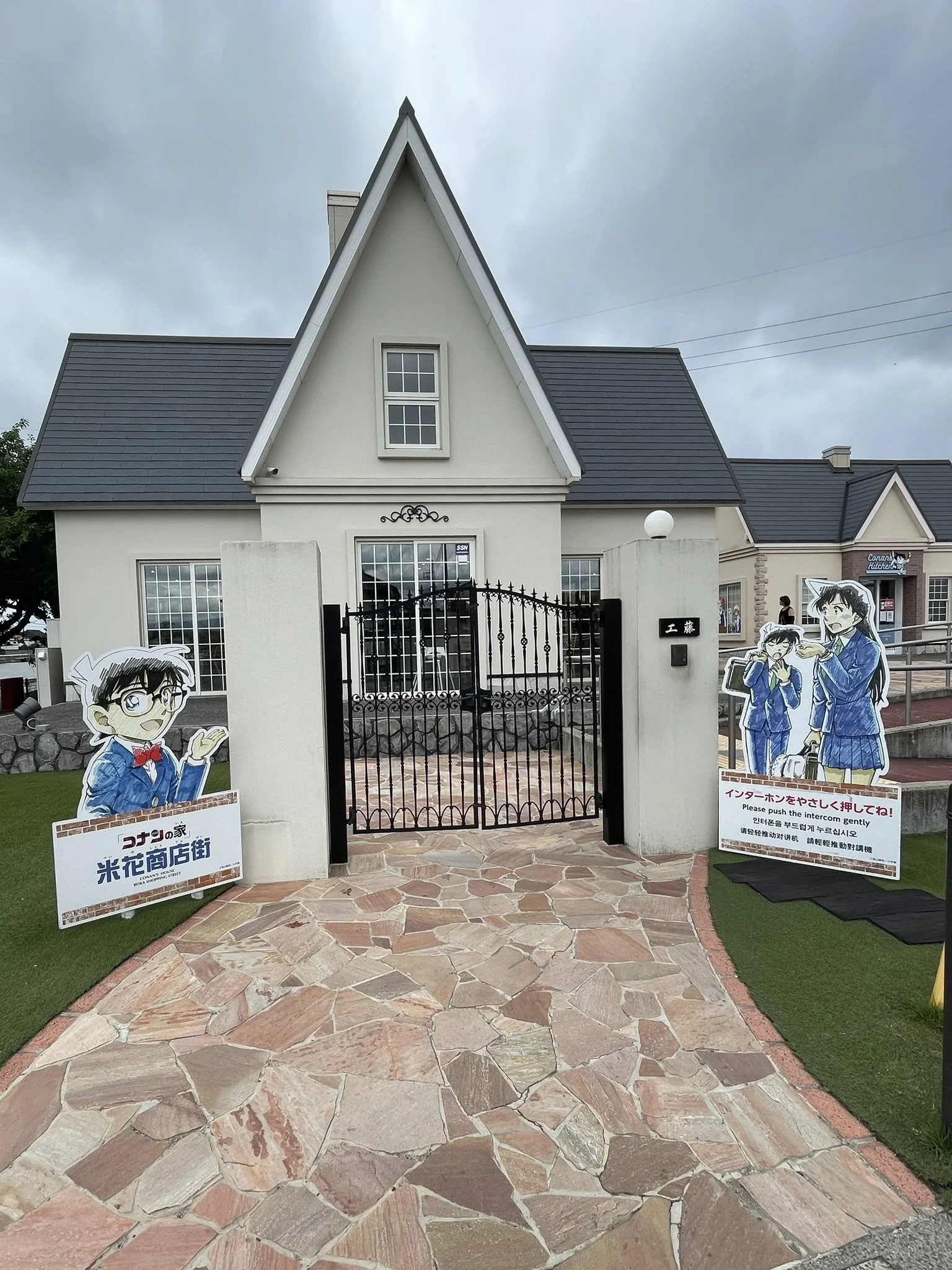
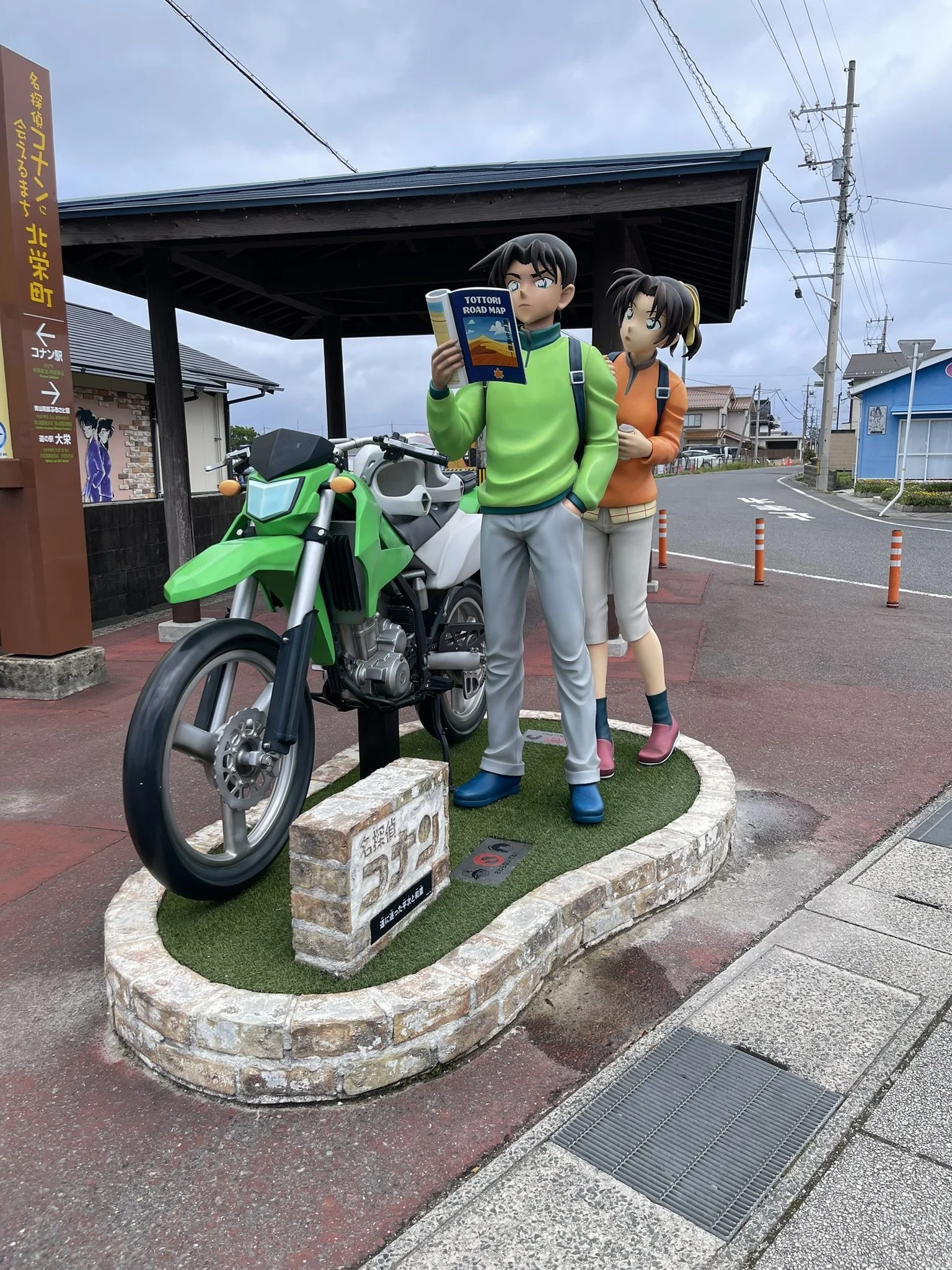
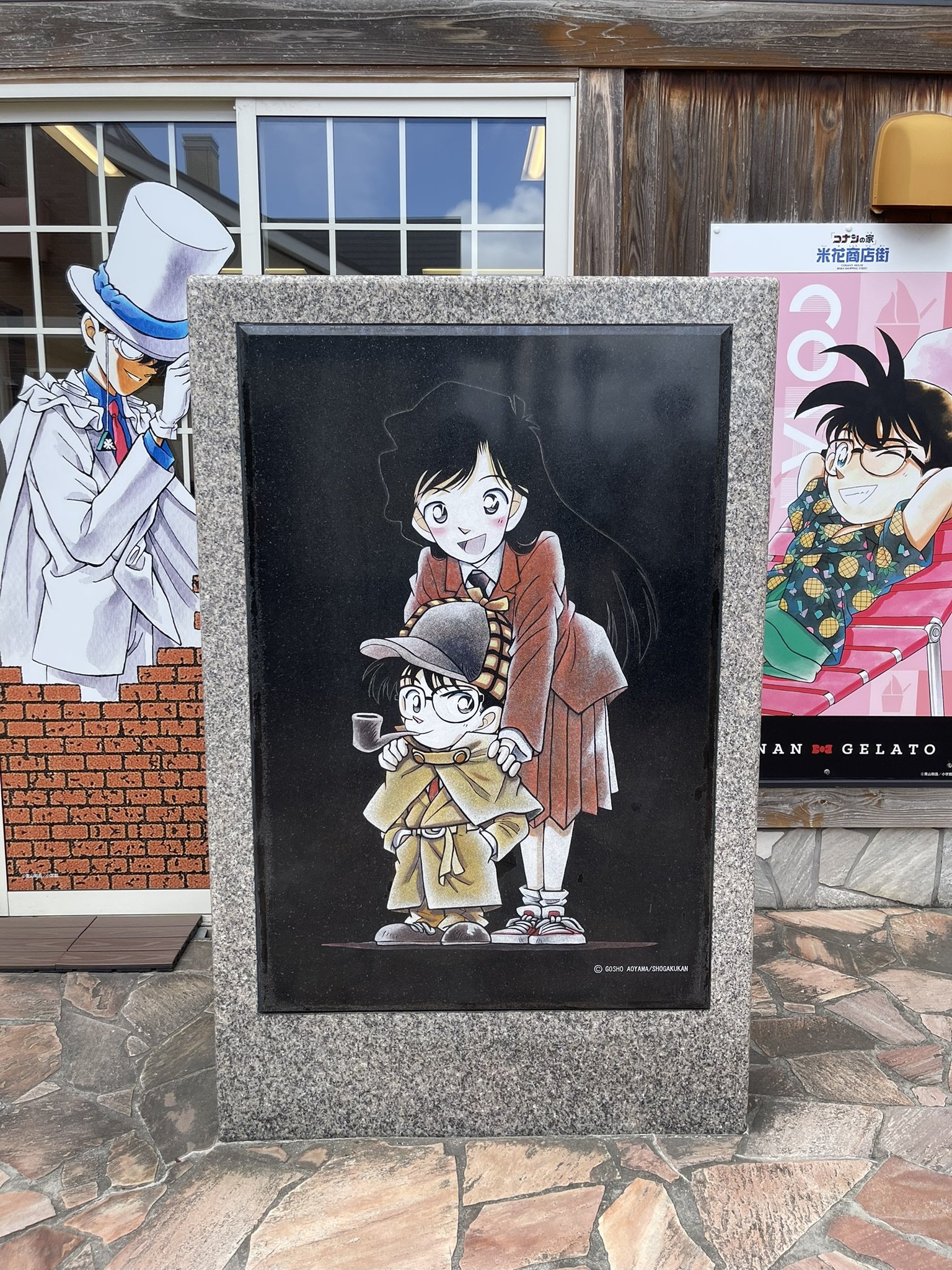
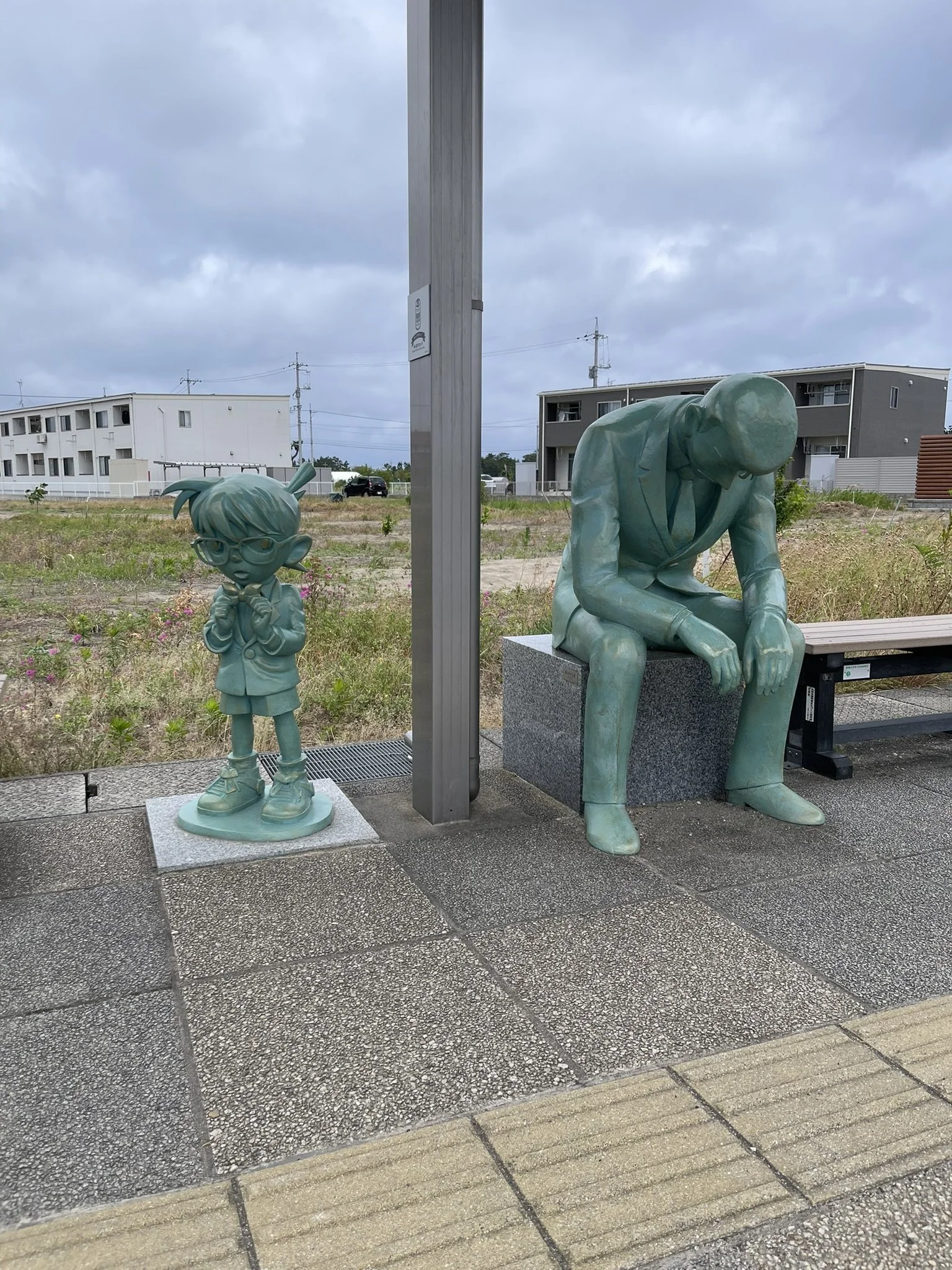
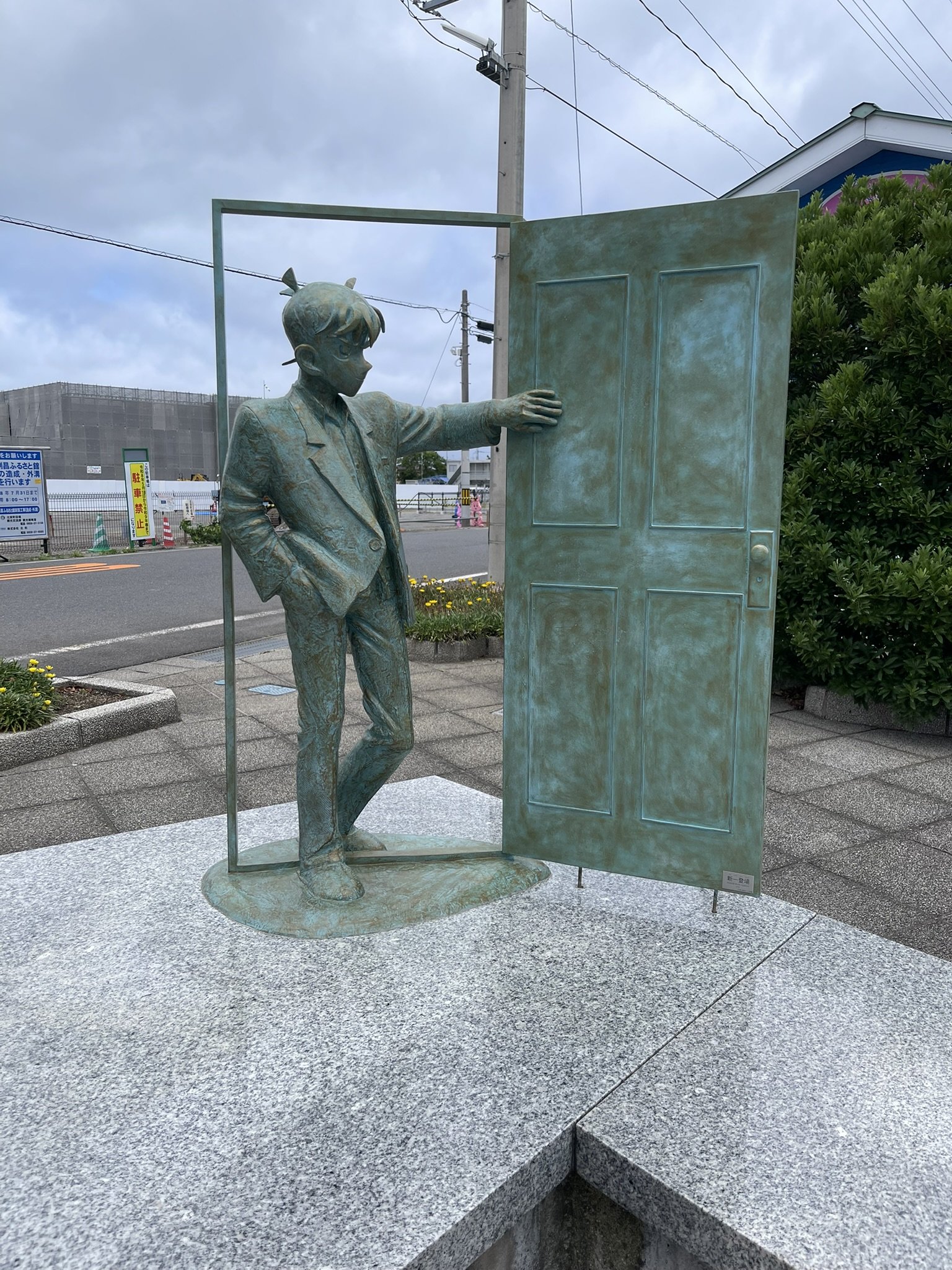
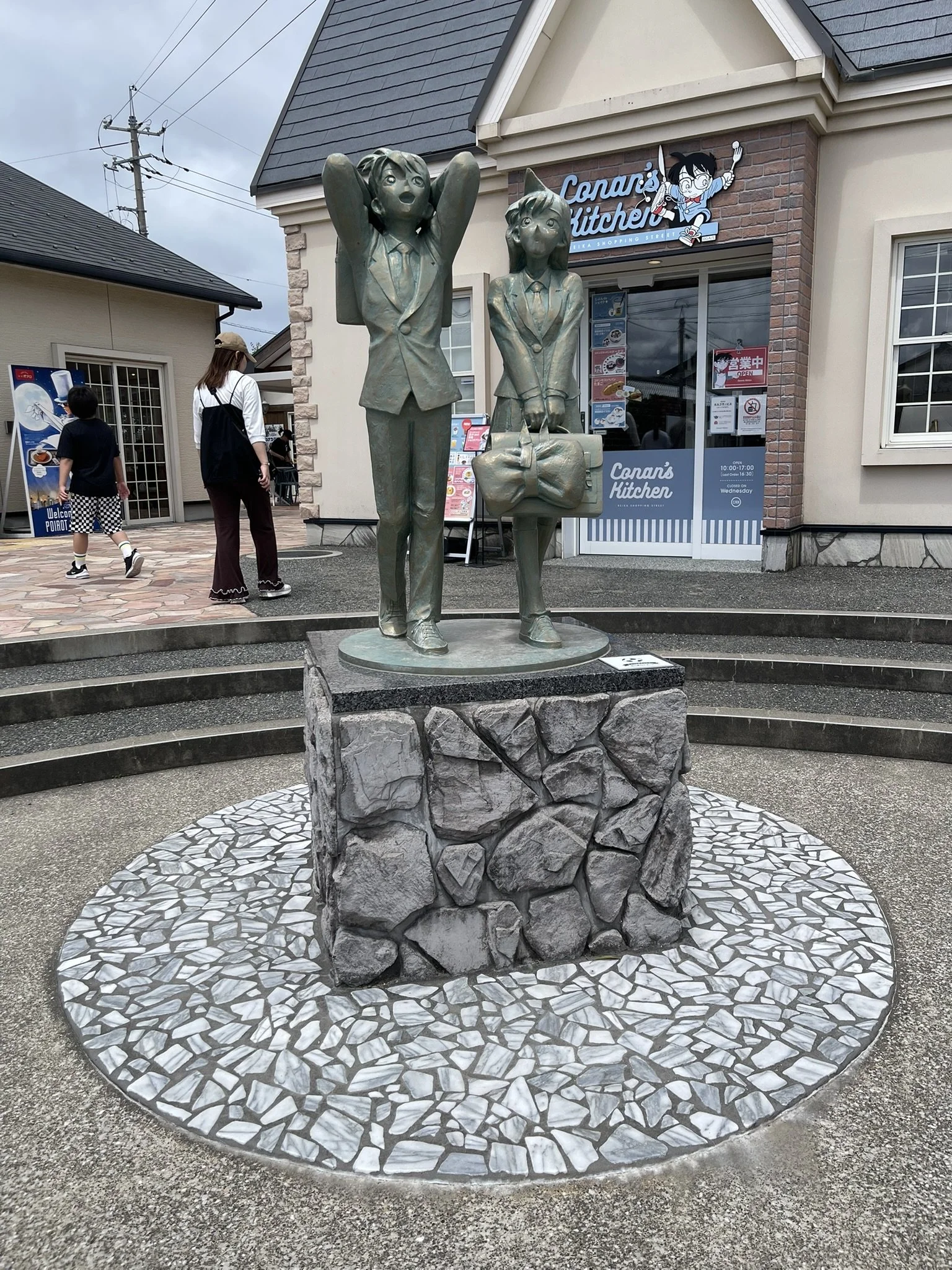
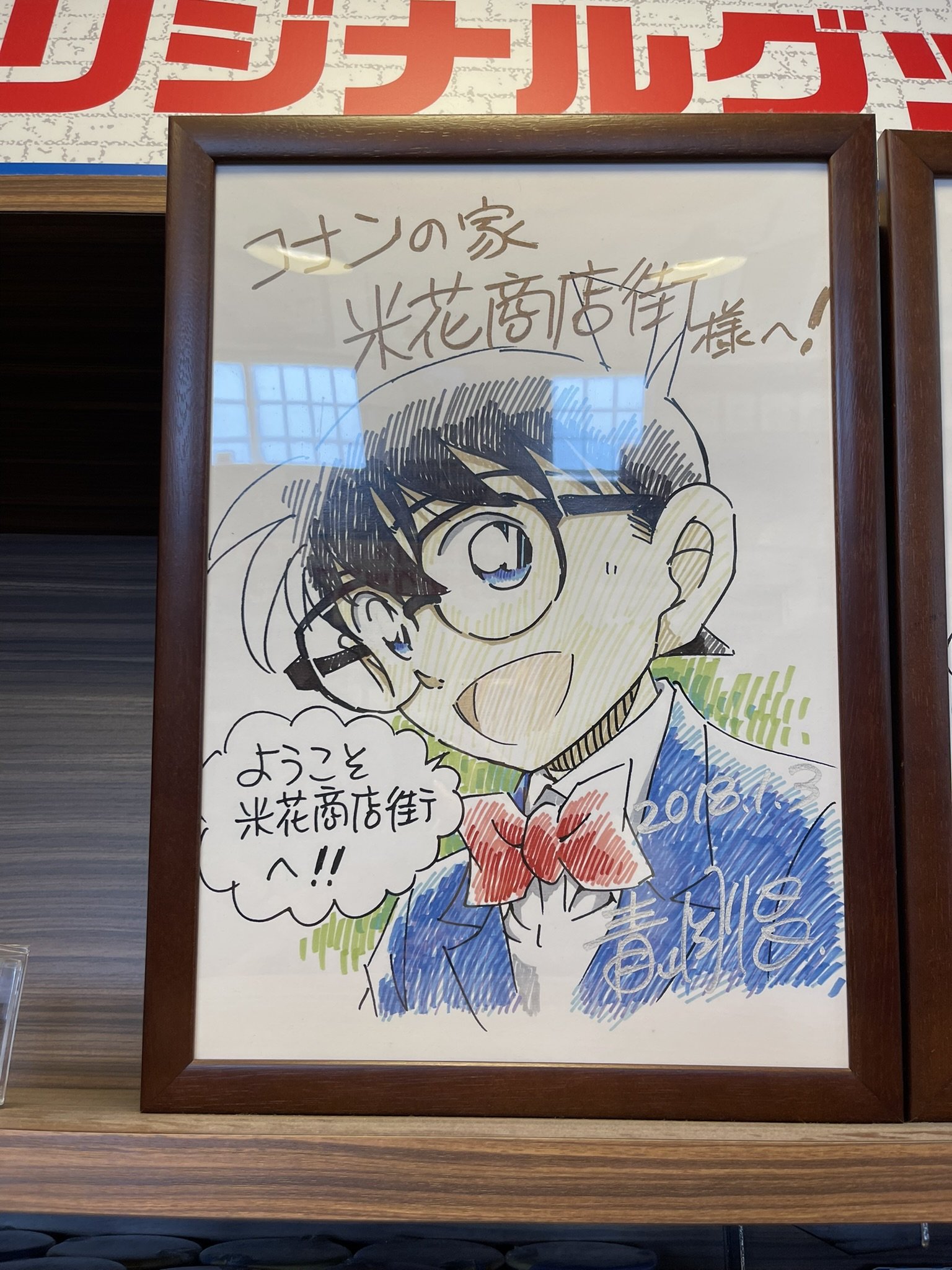
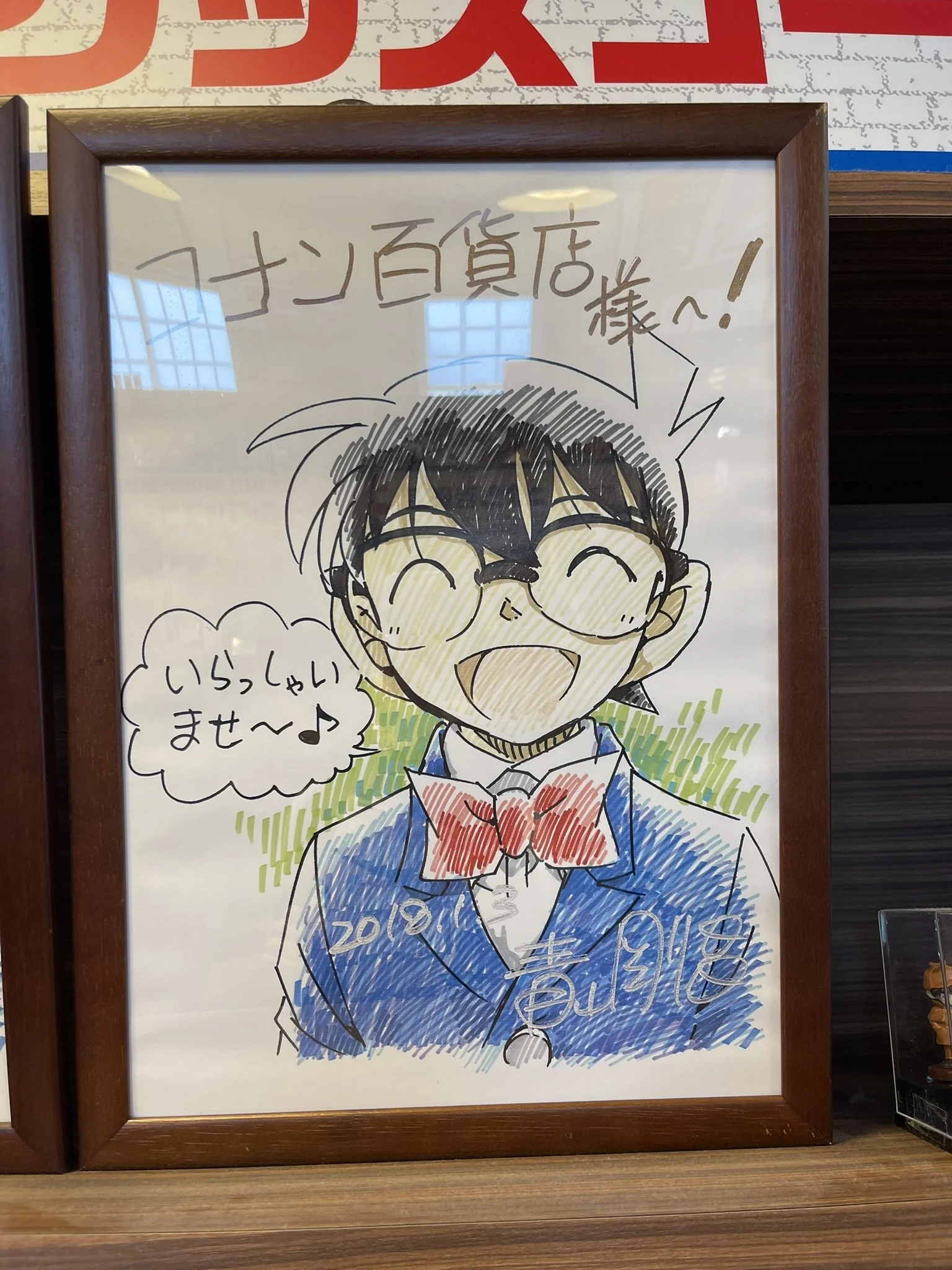
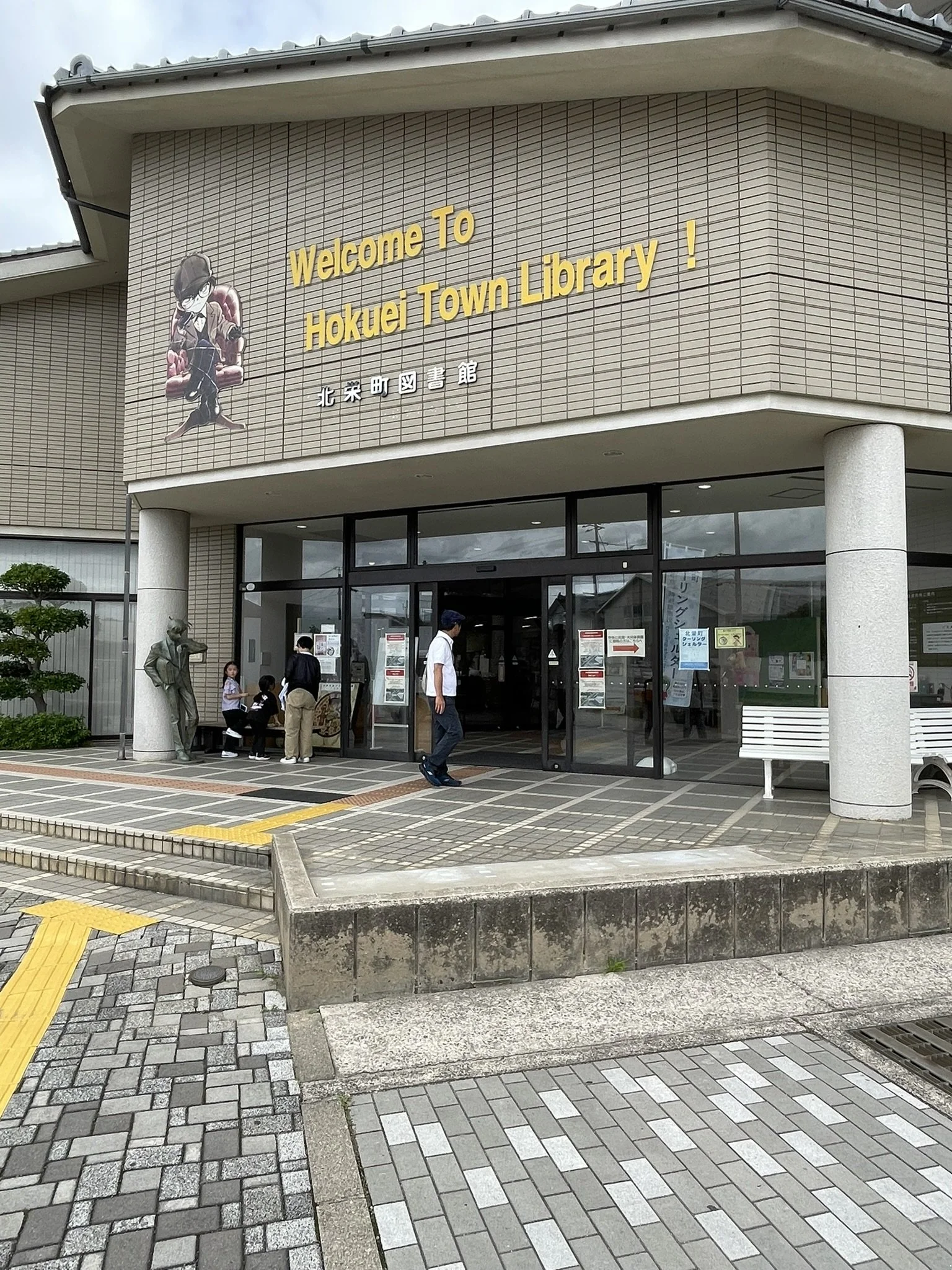
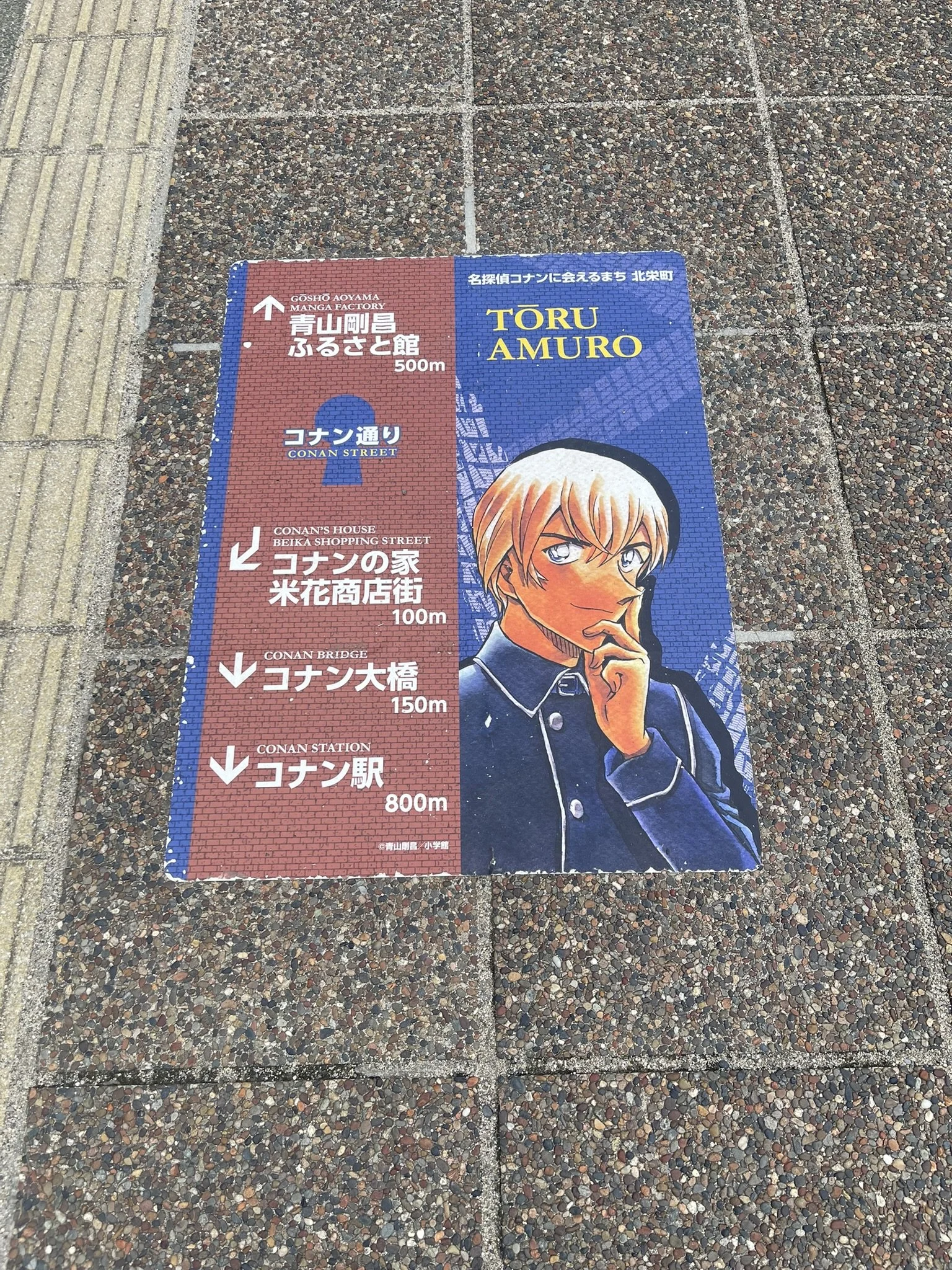
As both a fan and a scholar, that was probably the most enjoyable part of the experience for me. One moment I was simply excited to find another Conan statue and the next I was thinking about media tourism, fan practices and the relationship between fictional and physical space.
Inside the museum itself, I especially loved seeing Aoyama’s artwork and learning more about the creation of the manga. Naturally, photography was restricted around many of the original works, so there are parts of the visit I cannot share here. But honestly, I don’t mind. Sometimes it is nice to simply stand in front of original manga artwork and look. Seeing original material makes you much more conscious of the labor behind manga: the lines, composition, revisions and physical process that eventually disappear into the finished printed page.
Then you leave the museum—and Conan is still everywhere.
That is what I found so striking.
The character has escaped the page.
Conan exists in manga, anime, films, games, merchandise, statues, trains, streets, tourism and even the visual identity of a town.
And that made me think again about Conan’s relationship to another detective who has travelled extraordinarily far: Sherlock Holmes.
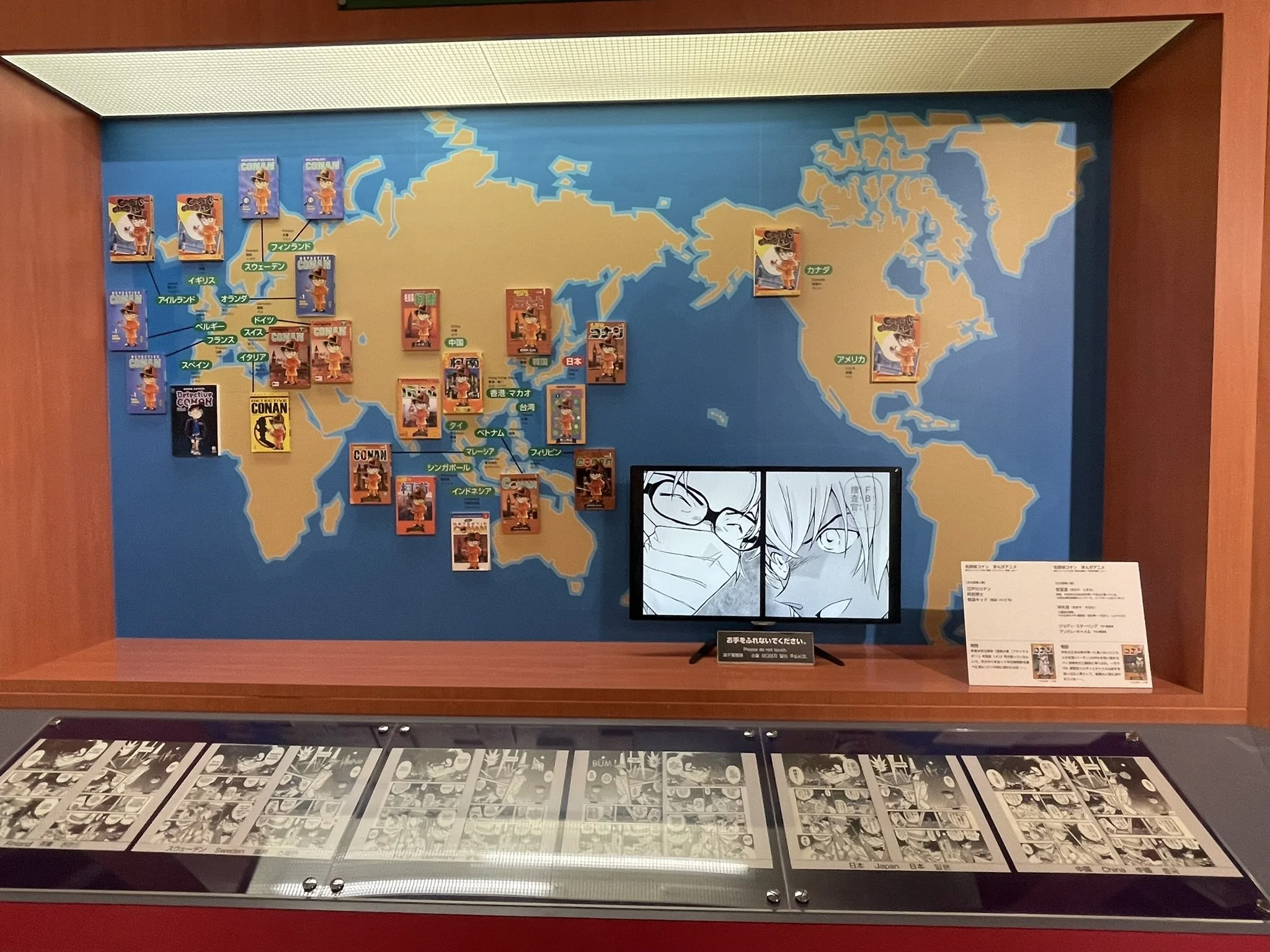
Shinichi Kudō is explicitly Sherlockian. Holmes is his hero and Detective Conan constantly references Holmes, Conan Doyle, Baker Street and the traditions of Western detective fiction. In one sense, then, Conan belongs to a long history of detective stories travelling from Britain to Japan, where they were translated, transformed, localized and reinvented. But what interests me just as much is what happens next…
Conan travels back out into the world.
The series has reached audiences throughout Asia, Europe, North America and beyond. A detective partly inspired by Sherlock Holmes has now become an internationally recognizable detective figure in his own right. So rather than thinking about this simply as “Western influence on Japan,” perhaps it is more useful to think about detective culture as continuously circulating.
Sherlock Holmes travels to Japan.
Japan remakes the detective.
Conan emerges.
And Conan travels across the world again.
Standing in Hokuei made that circulation feel strangely tangible. Here was a small town in Tottori Prefecture attracting visitors because of a fictional detective who himself belongs to a much longer, transnational history of detective fiction.
Detectives travel.
Stories travel.
And sometimes, people travel because of them.
Stay tuned for my next blog: Manga Made “Live”: Editors, Fans, and the Secret Life of Shōnen Jump
[日本語版]
しばらくブログを更新できていませんでした。
研究者として日々過ごしていると、論文や本の原稿、学会発表、授業準備など、「書かなければならないもの」は次から次へと出てくるのに、自分の研究や旅先で感じたことを、こうしてゆっくり振り返って書く時間はなかなか取れないものだなあと感じます。
この夏は、6月から8月まで日本に滞在し、客員研究員として研究活動を行っていました。そして8月25日にニューヨークへ戻ってきました。
帰国してからは、また新学期の準備に追われつつありますが(笑)、ようやく少し落ち着いて、この夏に訪れた場所や、そこで見たこと、考えたことを振り返る余裕が出てきました。
というわけで、今回はまず、以前からずっと「いつか絶対に行きたい!」と思っていた場所について書いてみようと思います。
『名探偵コナン』の世界を歩く――青山剛昌先生のふるさとへ
旅先には、たまたま予定に入ったから訪れる場所もあります。
でもその一方で、長いあいだ「いつか行きたい」と思い続けていて、実際にその場所に立った瞬間、なんだか少し現実味がなくなるような場所もあります。
私にとって、鳥取県北栄町にある青山剛昌ふるさと館は、まさにそんな場所でした。
探偵について考えたり、書いたり、話したりすることに、かなりの時間を費やしてきた人間として(笑)、青山剛昌先生のふるさとを訪れることは、ずっと前から「やりたいことリスト」に入っていました。
『名探偵コナン』は、私の日本の探偵マンガ研究にとって非常に重要な作品ですが、それ以前に、単純に私自身が大好きな作品でもあります。
だから、ようやく北栄町に到着したときは、なんというか……ちょっとした「探偵巡礼」を達成したような気分でした。
でも、実際に行ってみて一番驚いたのは、体験が「青山剛昌ふるさと館に入るところ」から始まるわけではないということです。
町そのものが、『名探偵コナン』の世界の一部になっているんです。
北栄町には「コナン通り」と呼ばれる道があり、歩いていると、キャラクターのブロンズ像や看板、マンホール、それからマンガの表紙を再現した石製のモニュメントなどが次々と現れます。
もちろん、写真は撮りすぎました(笑)。
町を歩いているだけなのに、それがちょっとした発見ゲームのようになってくるんですよね。
「次は誰がいるんだろう?」
「この先には何があるんだろう?」
と探しながら歩くことになります。
でも、よく考えてみると、それって探偵作品にはすごくぴったりだと思いませんか?
そもそも「探偵する」という行為は、空間の中を移動しながら細かいものに目を向け、手がかりを見つけ、他の人が見過ごしてしまいそうなものに意味を見出していくことでもあります。
北栄町を歩く観光客も、ある意味では、それに近いことをしているように感じました。
そして、青山剛昌ふるさと館は、実はこの大きな「コナンの風景」の一部にすぎません。
青山剛昌ふるさと館だけでなく、コナン大橋、コナンの家 米花商店街、観光案内所、道の駅、そして町のあちこちにキャラクターや作品にまつわる仕掛けがあります。
今回は行けなかった場所もいろいろあって、コナン駅や北栄町図書館、鳥取砂丘コナン空港など、まだまだ見てみたいところが残っています。
ひとつのマンガ作品が、ここまで現実の町のイメージやアイデンティティの一部になっていることが、本当に面白いなと思いました。
そしてもちろん、私はこういう場所に来ても、素直に楽しむだけでは終われないらしく……いつの間にか研究のことを考えていました(笑)。
観光研究者のKyungjae JangとSangkyun Kimは、フィクション、実際の場所、観光デザイン、そして観光客自身の参加が重なり合う空間を、「imagined playscapes(想像されたプレイスケープ/遊びの空間)」という考え方で論じています。
北栄町を歩きながら、私はずっとこの概念を思い出していました。
ここでは、ただ『名探偵コナン』に関係するものを「見る」だけではありません。
自分も、その空間に参加するんです。
コナンと一緒に写真を撮る。
キャラクターを探す。
マンガの表紙を撮影する。
コナン大橋を渡る。
米花商店街を歩く。
そして、絶対に必要ではないのに「これは買わなきゃ」と思ってお土産を買う(笑)。
そうしているうちに、フィクションの世界と現実の町との境界が、少しずつ重なって見えてきます。
ファンとして、そして研究者として、ここが一番面白かったところかもしれません。
ある瞬間には、ただ「わあ、またコナンがいた!」と喜んでいるのに、次の瞬間には、メディア・ツーリズムやファン文化、フィクションと現実の空間の関係について考えている(笑)。
青山剛昌ふるさと館の中では、青山先生の作品やマンガが作られていく過程について見られたことが、特に印象に残りました。
もちろん、原画など一部の展示は撮影禁止なので、ここでお見せできないものもたくさんあります。
でも、正直、それでよかったなとも思います。
時には、写真を撮ることを考えずに、ただ原画の前に立って、じっくり見るのもいいですよね。
普段、私たちはマンガを完成した単行本やデジタル版で読むことがほとんどですが、実際の原稿や制作の痕跡を見ると、線の一本一本や構図、修正、そして印刷されたページの裏側にある「マンガを作るという行為」を改めて意識させられます。
そして館内を見終えて外に出ると……
まだコナンがいる。
というより、どこに行ってもコナンがいる(笑)。
ここが、私にとって一番印象的でした。
コナンは、もうマンガの「ページの中」だけにはいないんですよね。
マンガ、アニメ、映画、ゲーム、グッズ、銅像、電車、道路、観光地、そして町そのもののイメージの中にまで存在しています。
そう考えているうちに、今度はコナンと、もう一人の「世界を旅してきた探偵」との関係について考え始めました。
そう、シャーロック・ホームズです。
工藤新一は、言うまでもなく非常にシャーロキアンな人物です。
ホームズは彼の憧れの探偵であり、『名探偵コナン』の中では、ホームズ、コナン・ドイル、ベーカー街、そして西洋の探偵小説の伝統が何度も参照されています。
そう考えると、コナンは、イギリスから日本へと渡ってきた探偵物語が、日本で翻訳され、変化し、ローカライズされ、新しい形に作り替えられてきた長い歴史の延長線上にいるとも言えます。
でも、私が同じくらい面白いと思うのは、その「次」です。
今度は、コナンが世界へ出ていく。
『名探偵コナン』は、アジア、ヨーロッパ、北米をはじめ、世界中の読者や視聴者に届いています。
シャーロック・ホームズから大きな影響を受けて生まれた探偵が、今ではそれ自体、国際的に認知される探偵キャラクターになっているわけです。
だからこれは、単純に「西洋文化が日本に影響を与えた」という一方向の話ではないのかもしれません。
むしろ、探偵文化そのものが、絶えず世界を循環していると考えた方が面白いように思います。
シャーロック・ホームズが日本へやってくる。
日本で探偵像が作り替えられる。
コナンが生まれる。
そして、そのコナンがまた世界へ旅していく。
北栄町に立っていると、その文化の循環が、急に目に見えるものになったような気がしました。
鳥取県のひとつの町に、世界中から人がやってくる。
そのきっかけになっているのは、長い探偵文学の歴史の中から生まれた、ひとりのフィクションの探偵です。
探偵は旅をする。
物語も旅をする。
そして時には、
その物語を追いかけて、私たち自身も旅をする。
なんだか、いいですよね。