October has been quite a month!
Between teaching, research, conference presentations and a few unexpected health setbacks, it has been a rather busy few weeks. But looking back, October has also been an incredibly rewarding month for my research, particularly as I continue developing my second book project and thinking more critically about the Japanese language pedagogy. And, of course, one of the unexpected pleasures of traveling for academic work in October is getting to enjoy the beautiful autumn scenery along the way!
On October 20, I was given the opportunity to visit Haverford College in Pennsylvania, where I was invited by Professor Kimiko Suzuki in the Department of East Asian Languages & Cultures to deliver a special workshop titled “Who Has the Right to Correct? Japanese, Diaspora, and Linguistic Authority.”
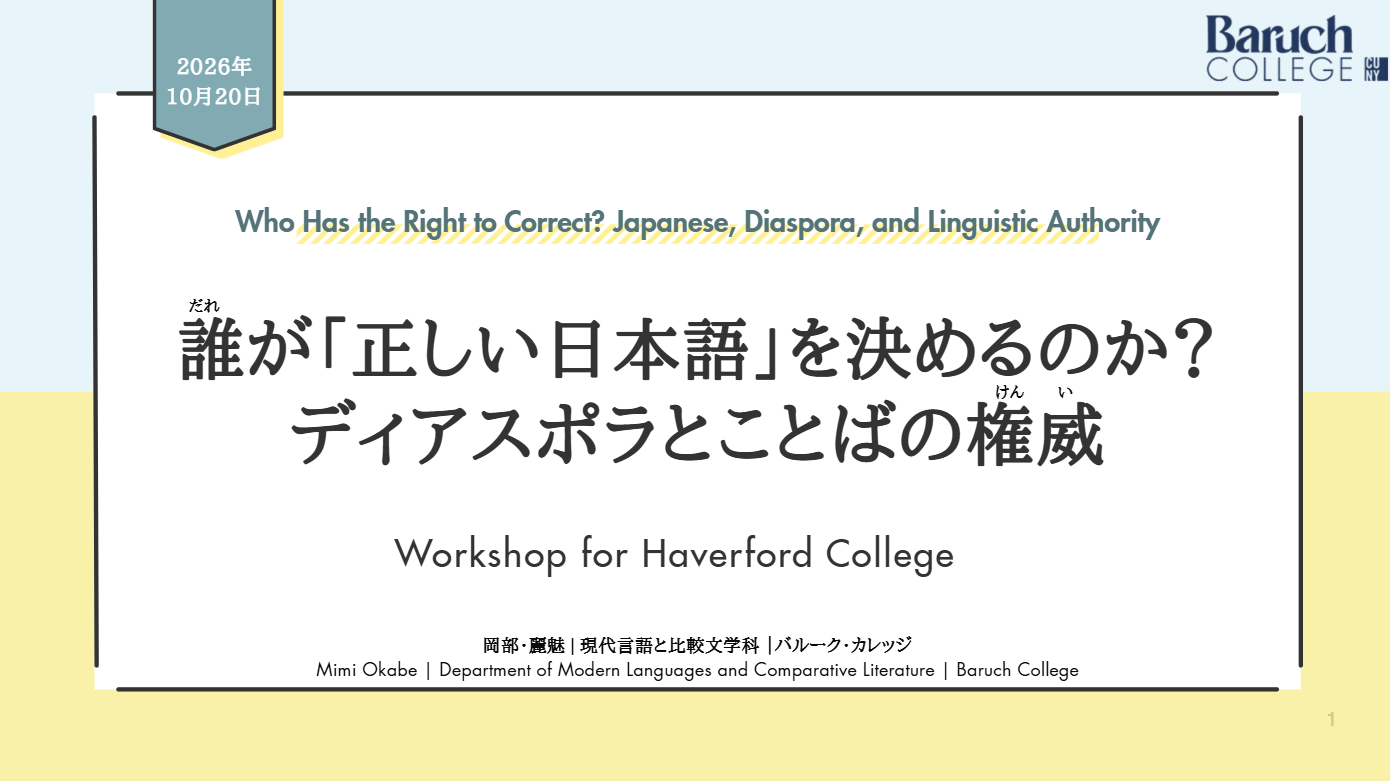
The workshop grew out of questions that have become increasingly important to me, both as a scholar and as a Japanese language educator. Who gets to decide what counts as "correct" Japanese? And what happens when the Japanese spoken within diasporic communities differs from the language taught in textbooks or used in contemporary Japan? Drawing on my experiences with Japanese for Nikkei, I wanted to explore how language correction can sometimes become a question of cultural legitimacy and belonging. One idea that I emphasized was that teaching someone another way of expressing something is not the same as telling them that the language they already possess is somehow illegitimate. These questions have also informed my approach to teaching introductory Japanese at Baruch College. Throughout the semester, I have incorporated a series of low-stakes assessments called Cultural Context Activities, which encourage students to think beyond vocabulary and grammar and reflect on broader questions of Japanese language, culture and representation. What has been particularly rewarding is seeing how thoughtfully my students engage with these activities. Although many are still learning basic Japanese expressions, some of their reflections have genuinely surprised me (in the best possible way!), especially when they draw connections between Japanese linguistic identity and their own experiences with language and heritage. Their responses have been just as informative for me as an educator, reminding me how much we can learn from the different perspectives students bring into the classroom.
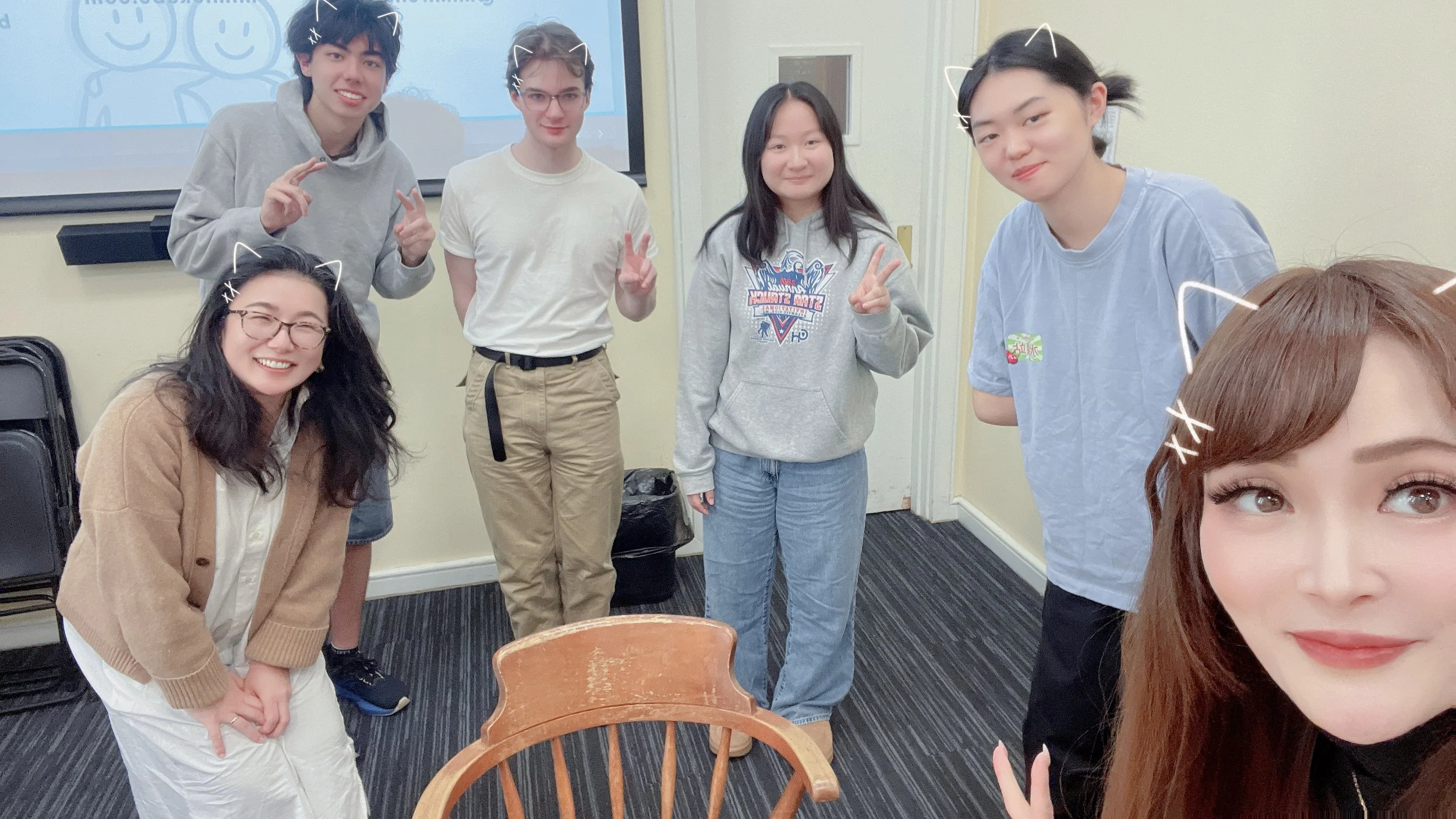
Tried to get cat ears on everyone! Arigato!
The workshop also included interactive activities inviting students to consider who counts as a Japanese speaker and how educators might approach linguistic differences through expansion rather than correction alone. I am especially grateful to Professor Suzuki for her generous invitation and to the Haverford students for their thoughtful participation and willingness to engage with these questions. It was such a pleasure to exchange ideas with everyone!
Later in October, I also had the opportunity to present some of my ongoing research at the 2026 NYCAS conference. My presentation, ‘Girl Detectives as Historians: Manga and the Politics of Investigation in the Meiji and Taishō Pasts,“ forms part of my second book project, Sleuthing Shōjo: The Case of the Girl Detective in Japanese Manga.
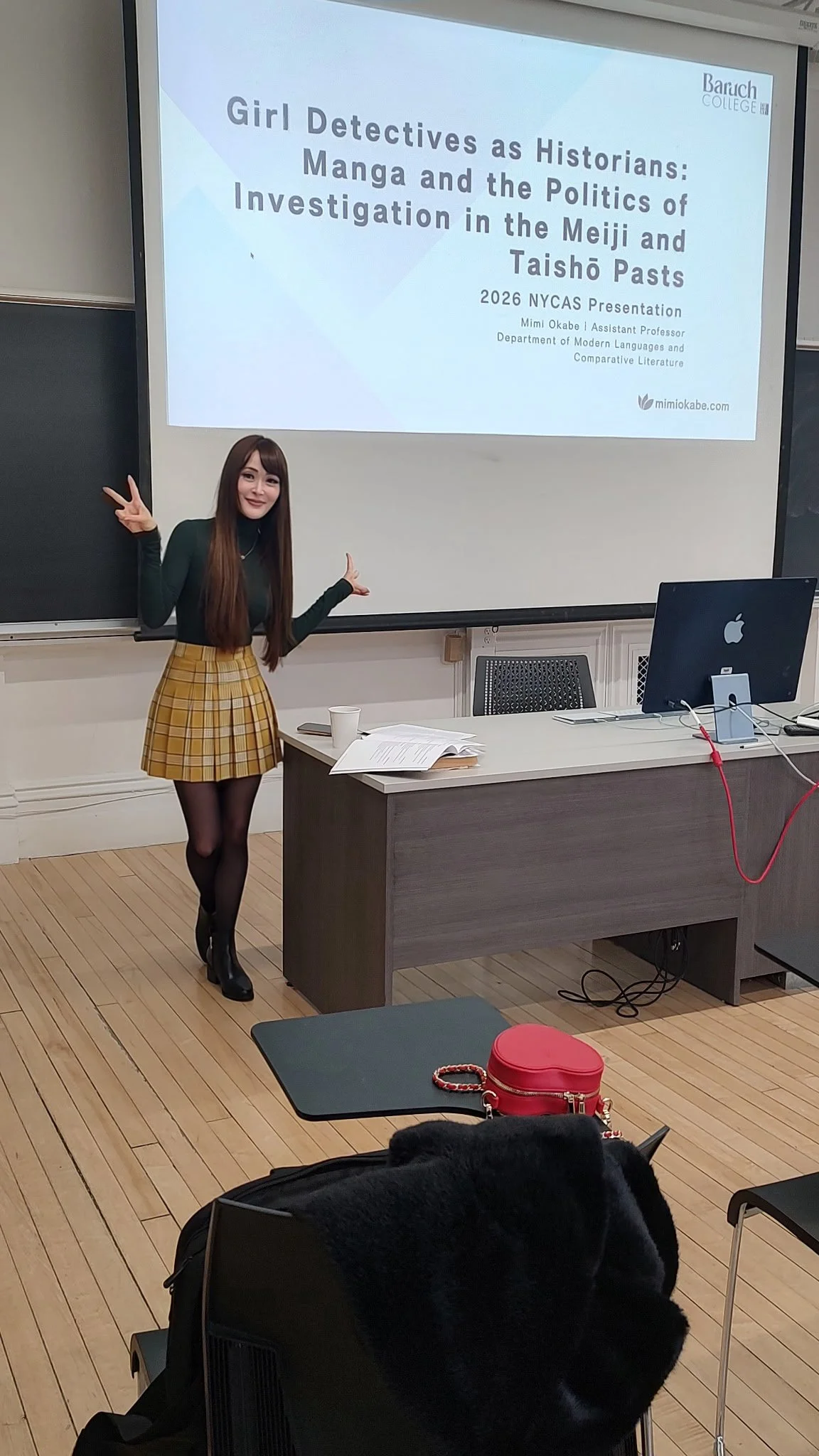
Thanks Ruki-chan for taking photos!
As some of you may know, I have spent the past two summers in Kyoto as a visiting researcher at Ritsumeikan University, with the generous support of the Asia Research Center and the Ritsumeikan Center for Game Studies. During this time, I was able to survey, compile, and catalogue more than 300 manga series, drawing on the extensive collections of the Kyoto International Manga Museum as well as rare and out-of-print materials at the National Diet Library. It has been an enormous undertaking (and one that has involved reading a rather ridiculous amount of manga, but I mean who can really complain about that!)
My NYCAS presentation focused on a selection of manga featuring girl and women detectives in historical settings, particularly the Meiji and Taishō periods. I'm not quite ready to reveal too much about the arguments just yet, since much of this research is still being developed into book chapters. But what continues to fascinate me is how these fictional detectives offer us different ways of thinking about gender, history and the act of investigation itself. In many ways, these questions also connect to some of the concerns I raised at Haverford. Who is recognized as an authority? Whose knowledge matters? And who gets to ask questions, challenge established narratives and arrive at their own conclusions?
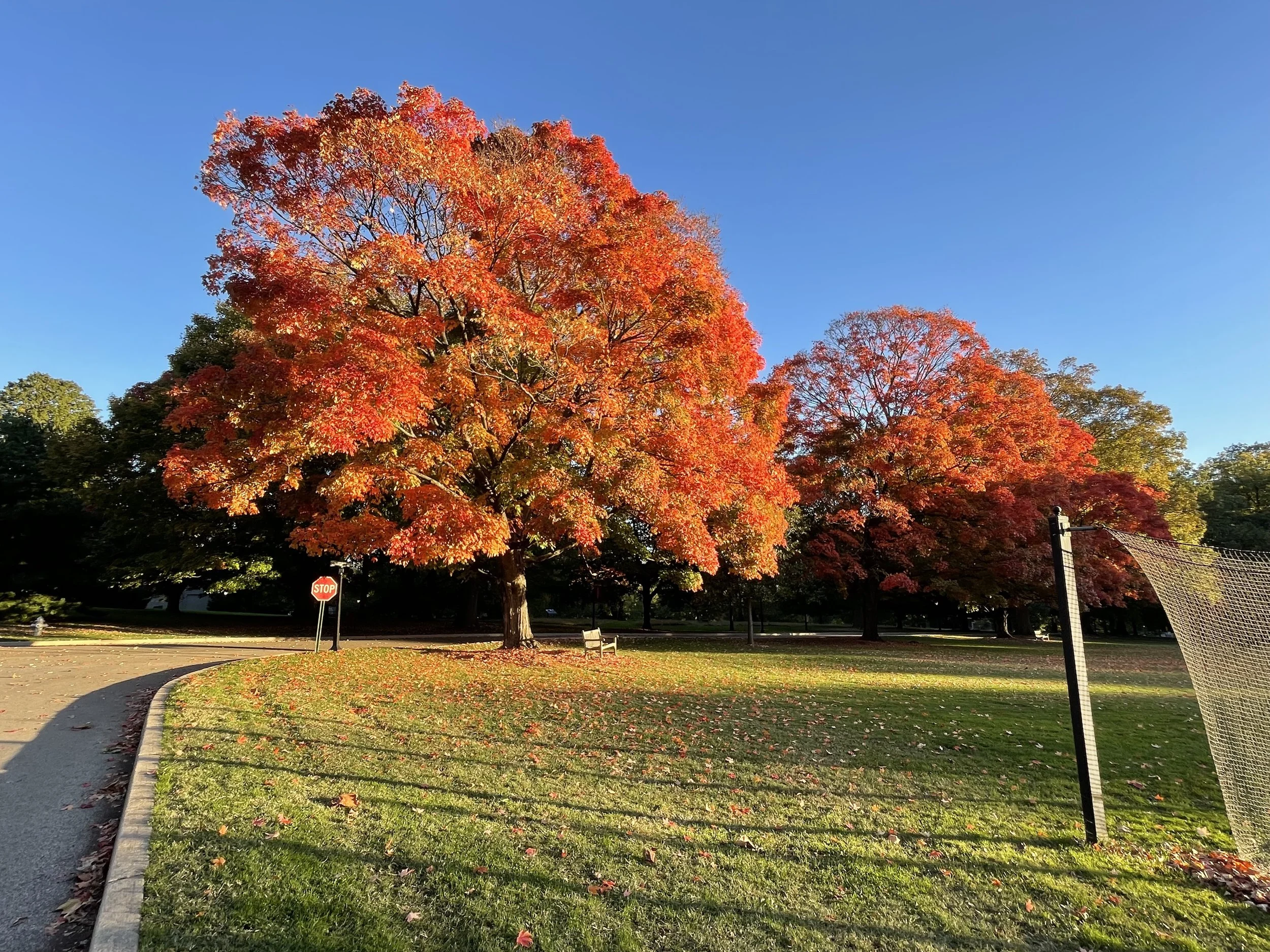
A beautiful tree I passed by on Haverford College Campus. Photo taken by author.
There is still plenty of work ahead, but I am excited to see how everything is gradually coming together!
Anyway, one of the things I love most about October is how beautiful university campuses become in the autumn! Whether traveling north or south of the city, I found myself surrounded by trees turning brilliant shades of yellow, orange and red. Naturally, I took plenty of pictures!
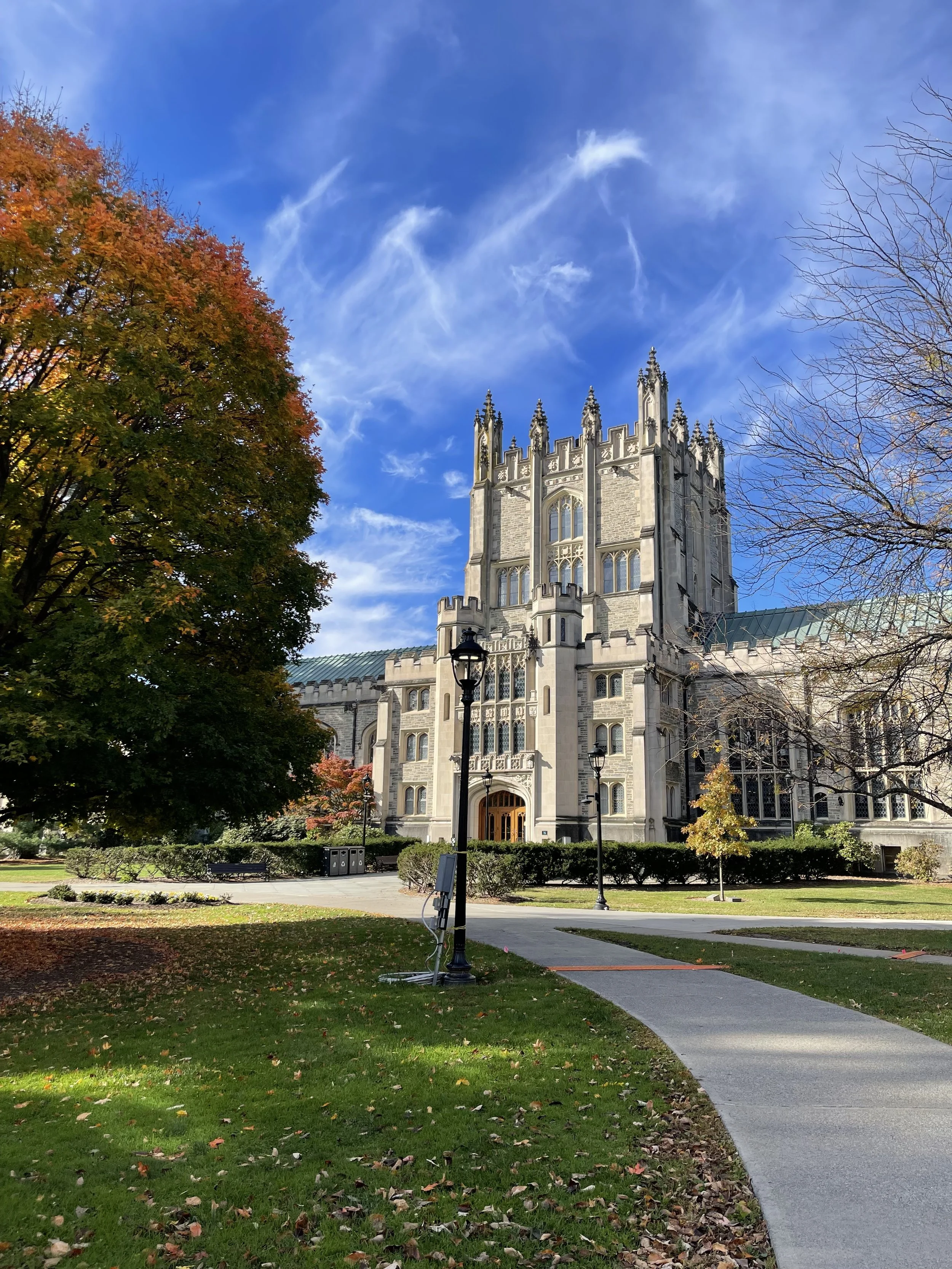
Thompson Memorial Library at Vassar College. Photo taken by author.
And with November just around the corner, I am looking forward to continuing this momentum (hopefully with a little less sickness and a little more time to write!)
[日本語版]
10月は本当にいろいろなことがあった1か月でした!
授業に研究、学会発表そして予想外の体調不良も重なり、なかなか慌ただしい数週間でした。それでも振り返ってみると、現在執筆を進めている2冊目の著書に関する研究や、日本語教育のあり方について改めて考える機会に恵まれ、とても充実した1か月だったように思います。そして、秋の学会や講演で出張する楽しみのひとつといえば、移動先で美しい紅葉を楽しめること!
10月20日には、ペンシルベニア州にあるハバフォード大学(Haverford College)を訪問しました。東アジア言語文化学科のKimiko Suzuki教授にお招きいただき、「誰に『訂正する権利』があるのか――日本語、ディアスポラ、そして言語的権威」(Who Has the Right to Correct? Japanese, Diaspora, and Linguistic Authority)と題した特別ワークショップを行いました。このワークショップは、研究者として、また日本語教育に携わる者として、近年ますます重要だと感じている問いから生まれたものです。「正しい」日本語とは、いったい誰が決めるのでしょうか。そして、海外の日系コミュニティで話されている日本語が、教科書で教えられる日本語や現代の日本で使われている日本語と異なる場合、私たちはその違いをどのように捉えるべきなのでしょうか。これまでのJapanese for Nikkeiでの経験を踏まえ、今回のワークショップでは、言葉を「訂正する」という行為が、時として文化的な正統性や帰属意識の問題と深く関わっていることについて考えました。特に強調したかったのは、ある表現に対して別の言い方を教えることと、その人がすでに身につけている言葉を「正しくないもの」として否定することは、決して同じではないという点です。こうした問題意識は、現在バルーク大学で担当している初級日本語の授業にも影響を与えています。今学期は、Cultural Context Activities(文化的文脈を考えるアクティビティ)という、成績への負担が比較的小さい課題を授業に取り入れています。学生たちには、単に語彙や文法を学ぶだけでなく、日本語や日本文化、そして文化的表象に関するさまざまな問いについて、自分なりに考えてもらうことを目的としています。
特に嬉しいのは、学生たちがこうした課題にとても真剣に取り組んでくれていることです。まだ基本的な日本語の表現を学んでいる段階にもかかわらず、彼らの考察には、私自身が良い意味で驚かされることも少なくありません!日本語と言語的アイデンティティの問題を、自分自身の言語経験や文化的背景と結びつけて考えている学生もいます。こうした回答は、教える立場にいる私にとっても大きな学びとなっており、学生たちが教室に持ち寄る多様な視点から、私自身も多くのことを学んでいると実感しています。
今回のワークショップでも、誰が「日本語話者」として認められるのか、また言語的な違いに対して、単に「訂正する」のではなく、表現の選択肢を広げるという観点からどのように向き合えるのかを考える、参加型のアクティビティを取り入れました。このような貴重な機会をくださったSuzuki教授、そして積極的に参加し、さまざまな問いに真剣に向き合ってくれたハバフォード大学の学生の皆さんに、心から感謝しています。皆さんと意見を交わすことができ、本当に楽しい時間でした!
10月後半には、2026年のNYCAS学会でも、現在進めている研究の一部を発表する機会がありました。発表タイトルは「歴史家としての少女探偵――明治・大正時代を舞台とする漫画と捜査の政治学」(Girl Detectives as Historians: Manga and the Politics of Investigation in the Meiji and Taishō Pasts)です。この研究は、現在執筆中の2冊目の著書、Sleuthing Shōjo: The Case of the Girl Detective in Japanese Manga の一部となるものです。ご存じの方もいるかもしれませんが、私は過去2年間、夏の期間を利用して京都の立命館大学に客員研究員として滞在してきました。この研究滞在は、アジア研究センター(Asia Research Center)と立命館大学ゲーム研究センター(Ritsumeikan Center for Game Studies)のご支援によって実現したものです。その間、京都国際マンガミュージアムの豊富な所蔵資料に加え、国立国会図書館に所蔵されている貴重な資料や絶版作品などを調査し、300シリーズ以上の漫画作品を収集・整理してきました。想像以上に大がかりな作業でしたが、その過程で本当にたくさんの漫画を読むことになりました(少々読みすぎではないかと思うほどですが、漫画を読むのが仕事なのですから、文句は言えませんね!ウフフ)。
今回のNYCASでの発表では、明治・大正時代を舞台に、少女や女性の探偵が活躍する漫画作品をいくつか取り上げました。現在、これらの研究成果を本の各章としてまとめている途中なので、具体的な議論についてはまだあまり詳しくお話しできません。ただ、こうした架空の探偵たちが、ジェンダーや歴史、そして「捜査する」という行為そのものについて、どのような新しい視点を提示しているのかという点に、私はますます興味を惹かれています。考えてみると、これらの問いは、ハバフォード大学でのワークショップで取り上げた問題とも、どこかでつながっているように思います。誰が権威ある存在として認められるのか。誰の知識が重要だとみなされるのか。そして、誰に問いを立て、既存の物語や解釈に異議を唱え、自分自身の結論を導き出すことが許されるのか。
まだまだ取り組むべきことは山積みですが、少しずつ研究の全体像が形になっていくことに、とてもわくわくしています!
さて、話は少し変わりますが、10月の楽しみといえば、やはり秋の大学キャンパスの美しさです!ニューヨークから北へ向かっても南へ向かっても、黄色やオレンジ、赤に色づいた木々が本当に見事で、思わず足を止めてしまうような景色に何度も出会いました。もちろん、写真もたくさん撮りました!
そして、もうすぐ11月(早すぎ!!)。この調子で研究を進めていきたいと思っています(できれば、もう少し体調を崩すことなく、執筆の時間も確保できると嬉しいのですが!)笑