Knock, knock! Holmes, are you home? by Mimi Okabe

Visiting the Sherlock Holmes museum in London, England is probably every Sherlock Holmes fan’s dream. Even if you’re not a die-hard fan, you should find it amusing!
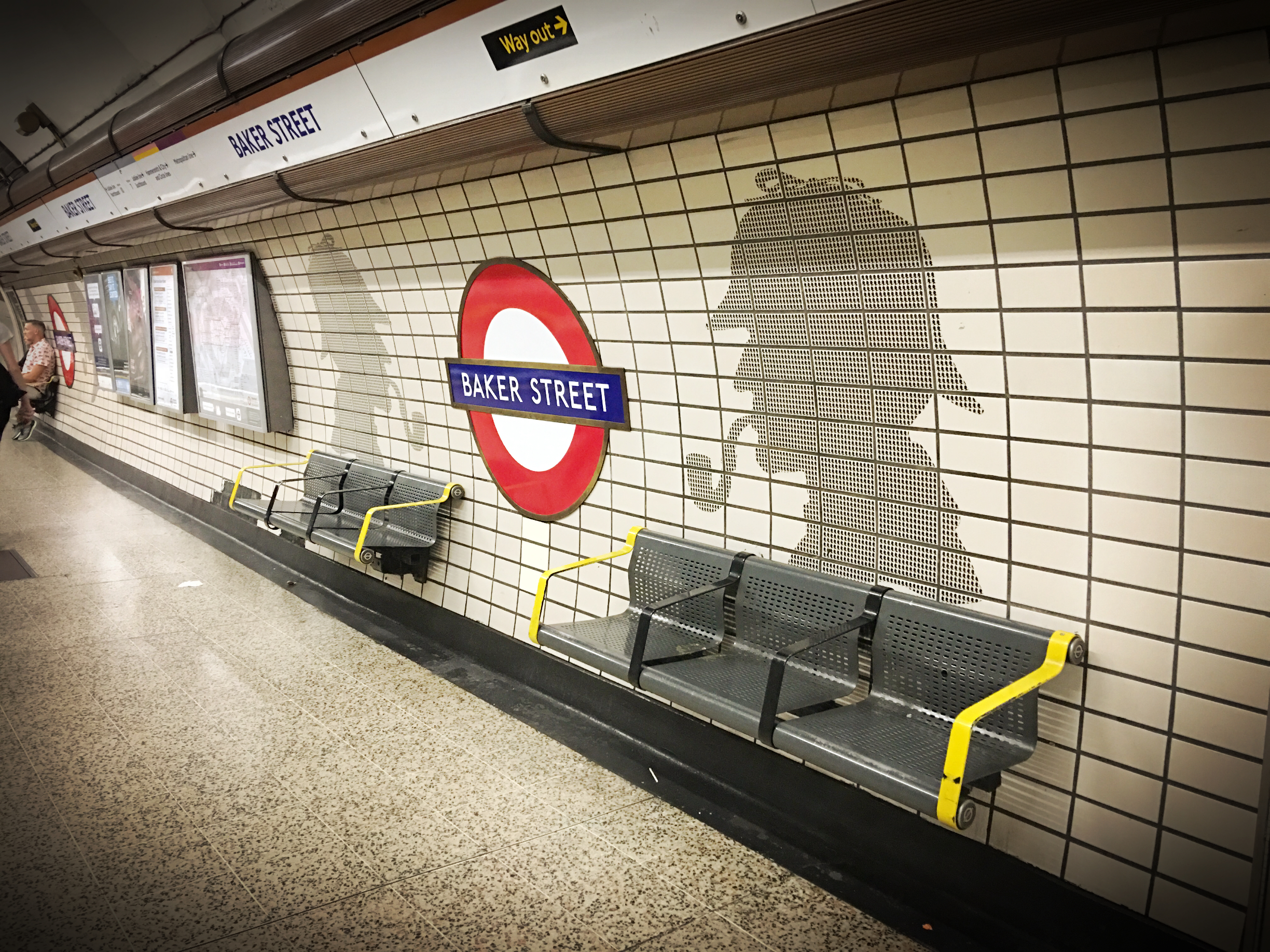
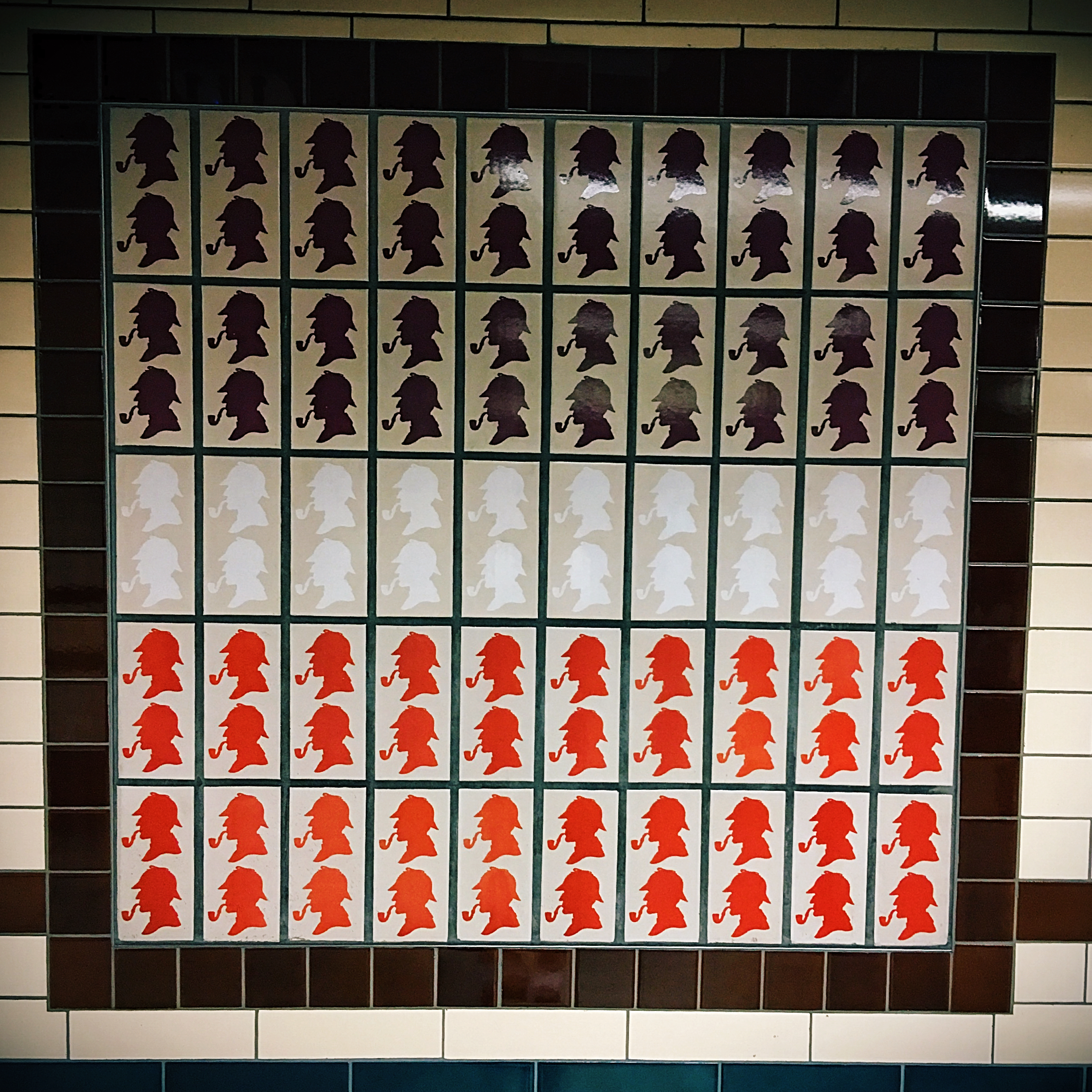
For starters, if you’re in London, take the metro to Baker Street Station where you’ll find the iconic silhouette of Holmes smoking his pipe along the walls of the station. Then, head down to 221b Baker St, Marylebone.

There used to be an online system where you could purchase tickets in advance but for whatever reason that service has been discontinued. To get tickets, you’ll have to walk into the gift store, which is right next to the museum. The tickets cost £15 each (around $26.00 CAD) for adults. Once you’ve obtained your “golden key,” line up in front of the door to 221b, which is guarded by men from the Scotland Yard, but have no fear because they aren’t real police. In fact, they’re super friendly and funny. Don’t forget to snap a few photos with them too! For details about the museum click here.

IMG_2537.JPG

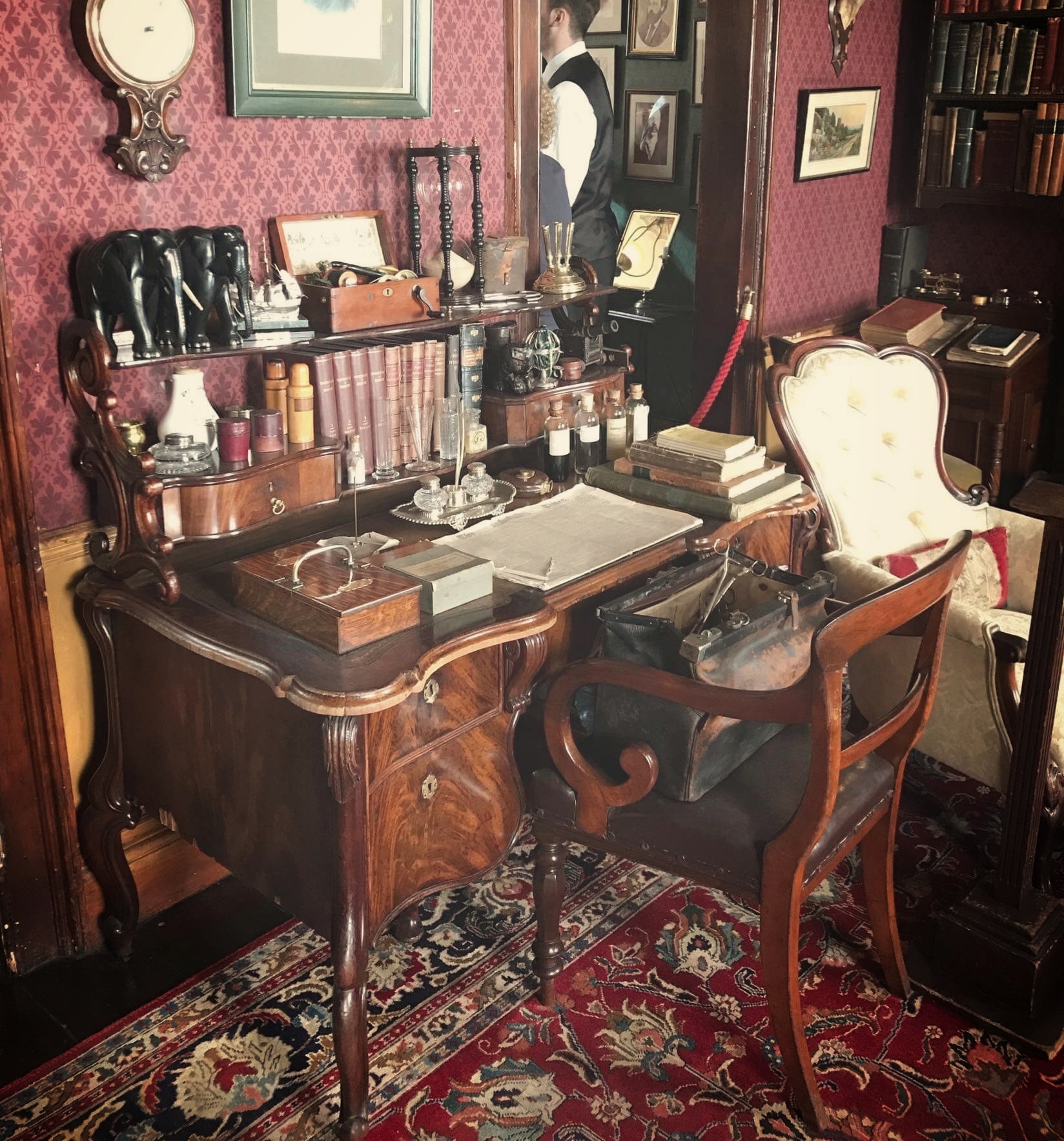
I visited the museum on a weekday sometime during the first week of September in the late afternoon, and the cue wasn’t very long. The museum allows a large group of people (I think 10-15) to enter at once, so even if there’s a long cue, you won’t wait that long. The tour begins in the famous study, and if you haven’t read Sir Arthur Conan Doyle’s stories, it might seem underwhelming since many of the small details in that room—the violin, chemistry set, the wall covered in bullet holes—speak to Holmes’s hobbies and habits that any aficionado would pick up on. Luckily, there’s a guide who’ll explain the significance of each room, and because we’re all squeezed in a small space, there’s no way you’ll miss anything s/he says.

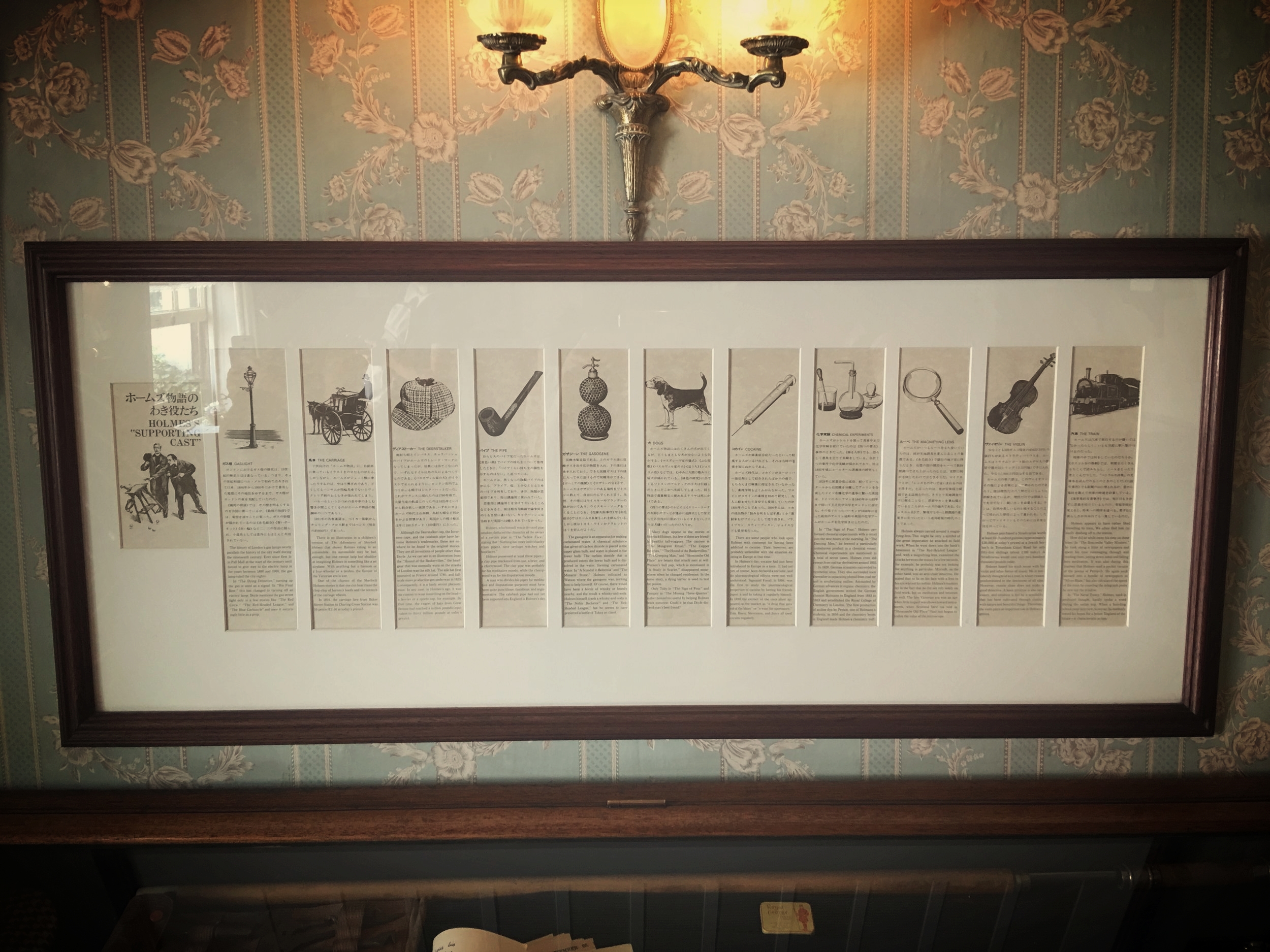
For me, the study represents an iconic space. It’s the place where Sherlock Holmes met many of his clients and where many of his adventures with Watson began. Unfortunately, when I went, there was rope barricading me from sitting on the chairs so I couldn’t role play as Holmes or Watson and snap a few pics (as I have heard others have done), but the museum showcases other really interesting artifacts. What stood out for me was a bound collection of fan made works and letters sent to the museum from China, and a framed, leaflet-like-poster titled “Holmes’s supporting cast” featured in both Japanese and English. This speaks to the sustained influence and popularity of Sherlock Holmes in Asia (and on a global scale) as Doyle’s work have been adapted across linguistic borders and cultures.
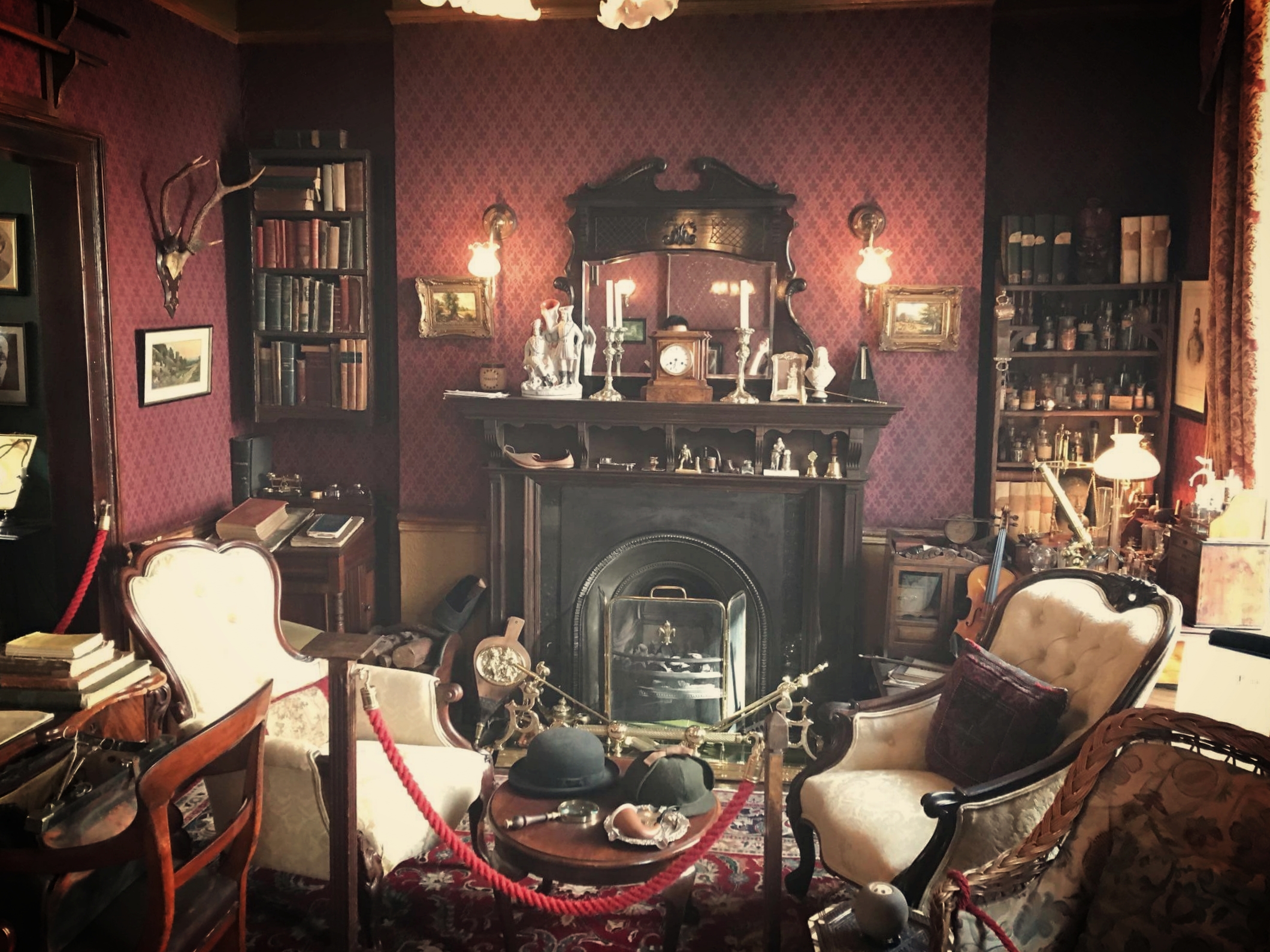
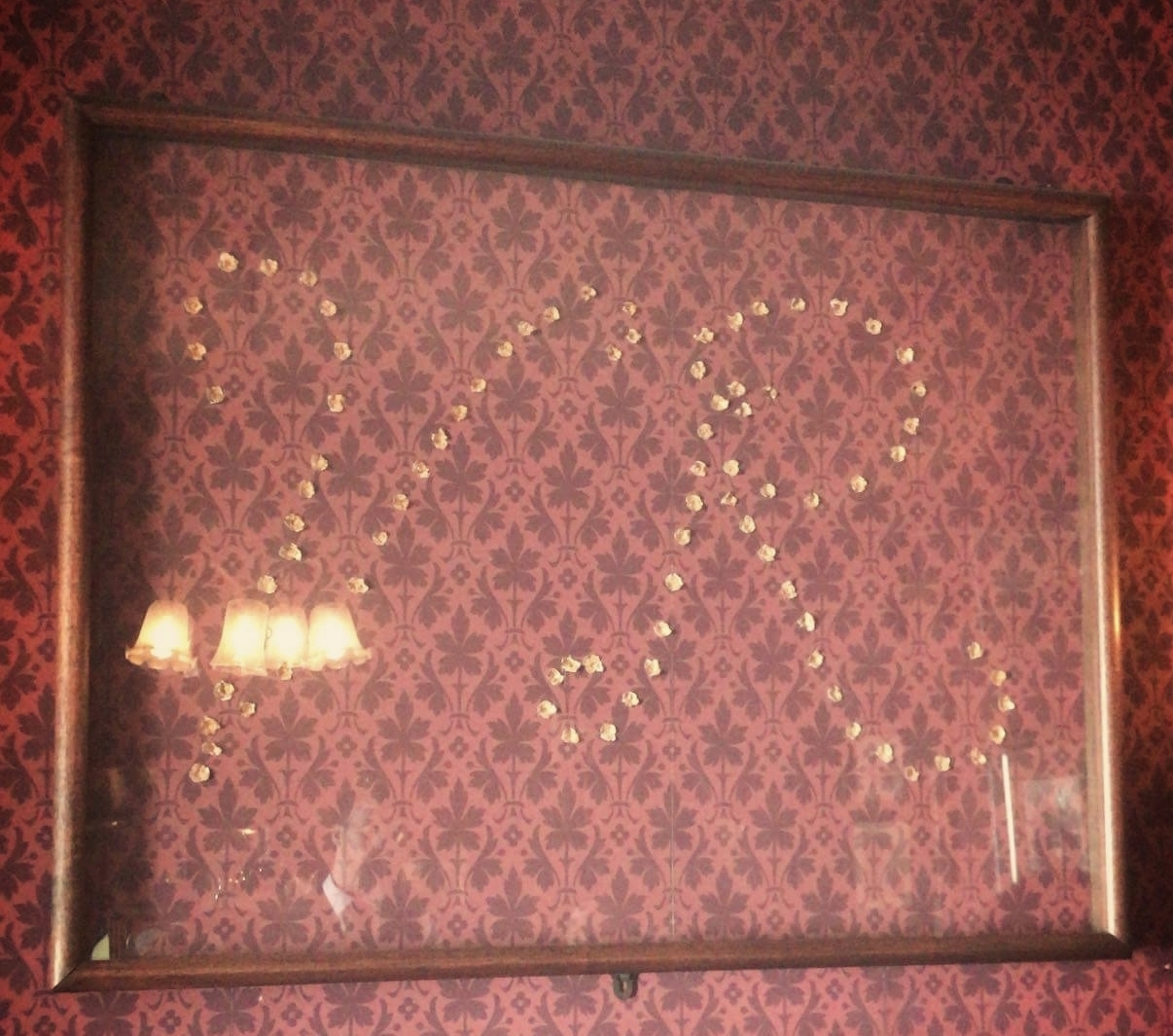
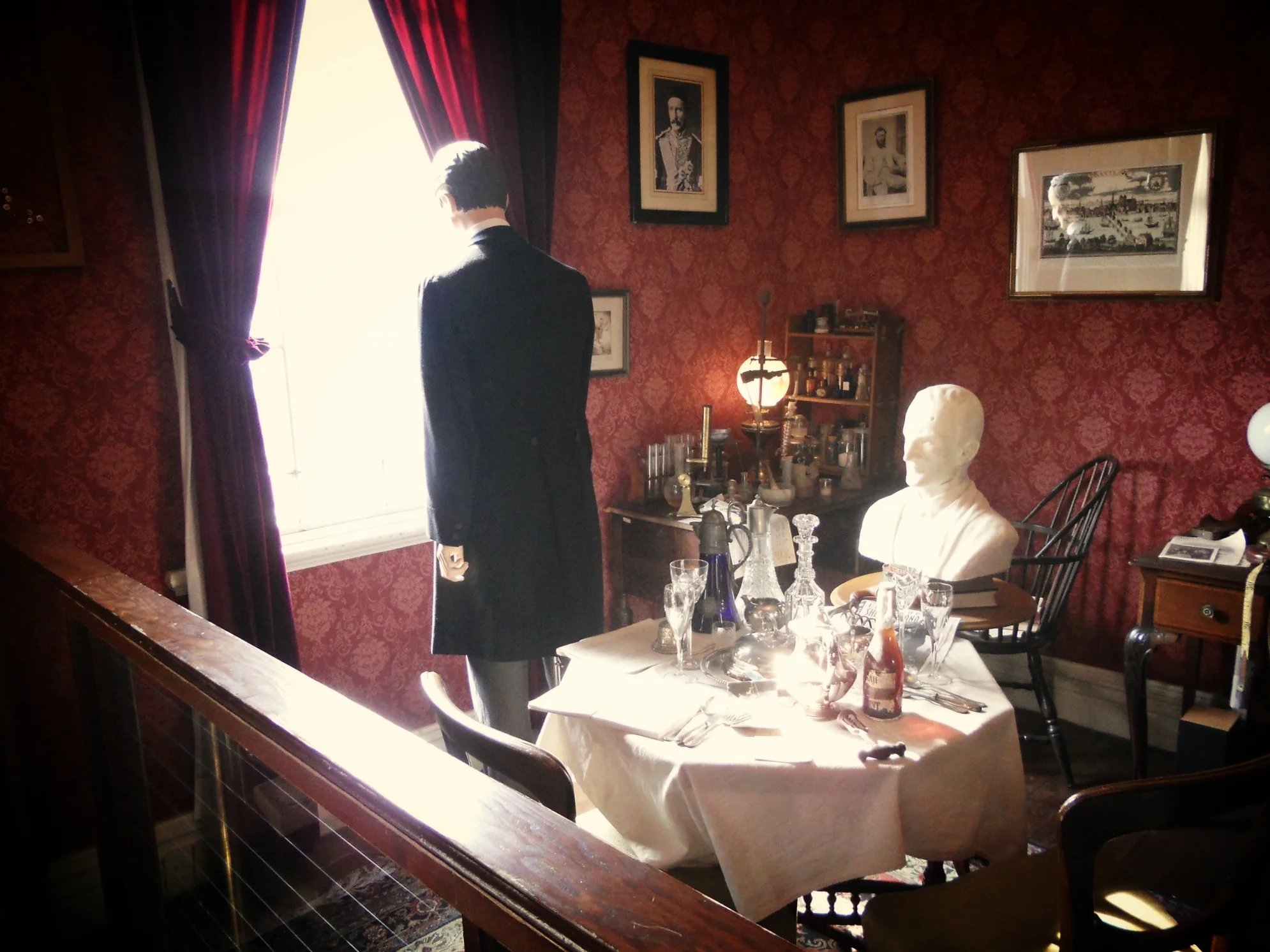
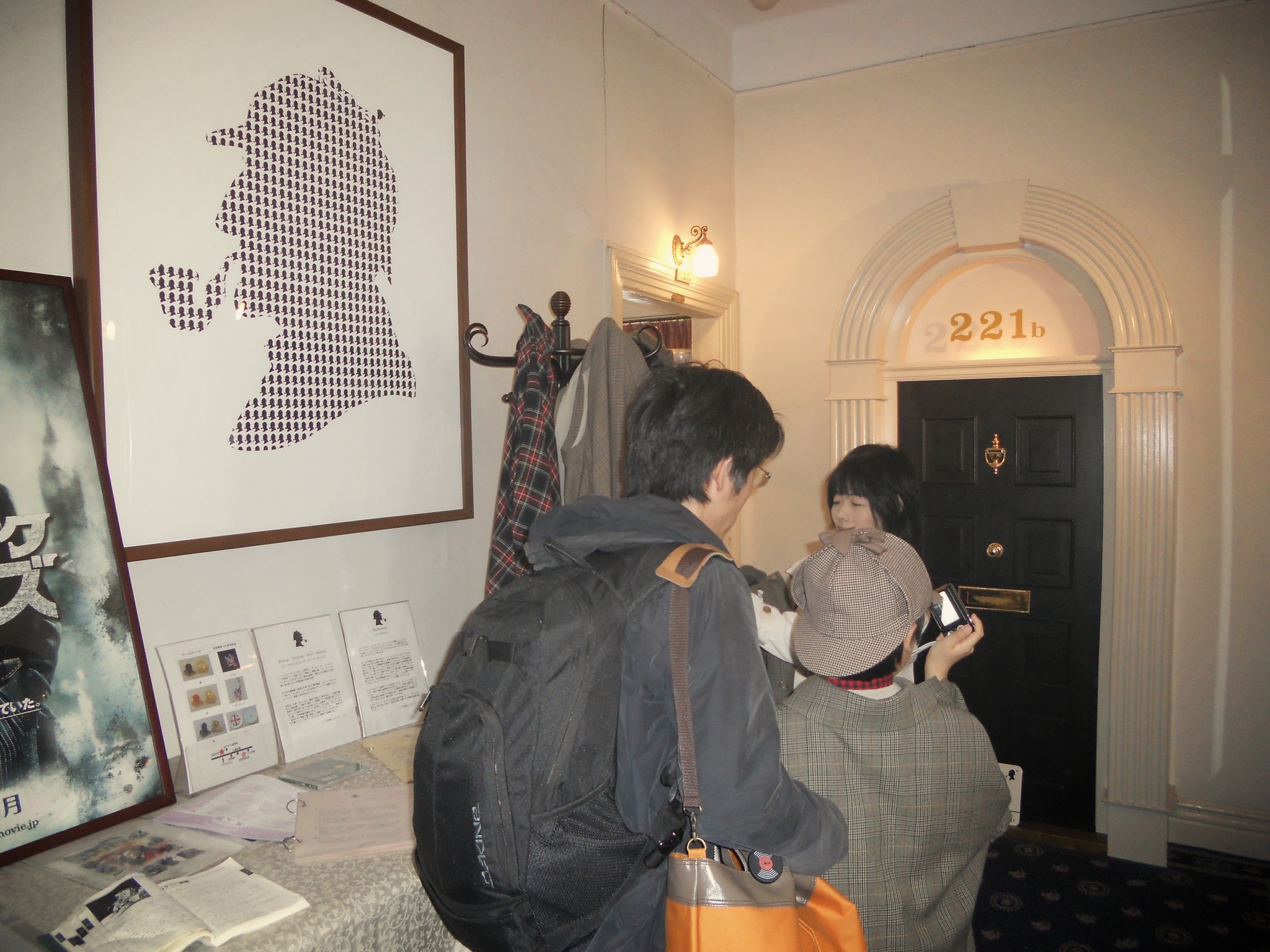
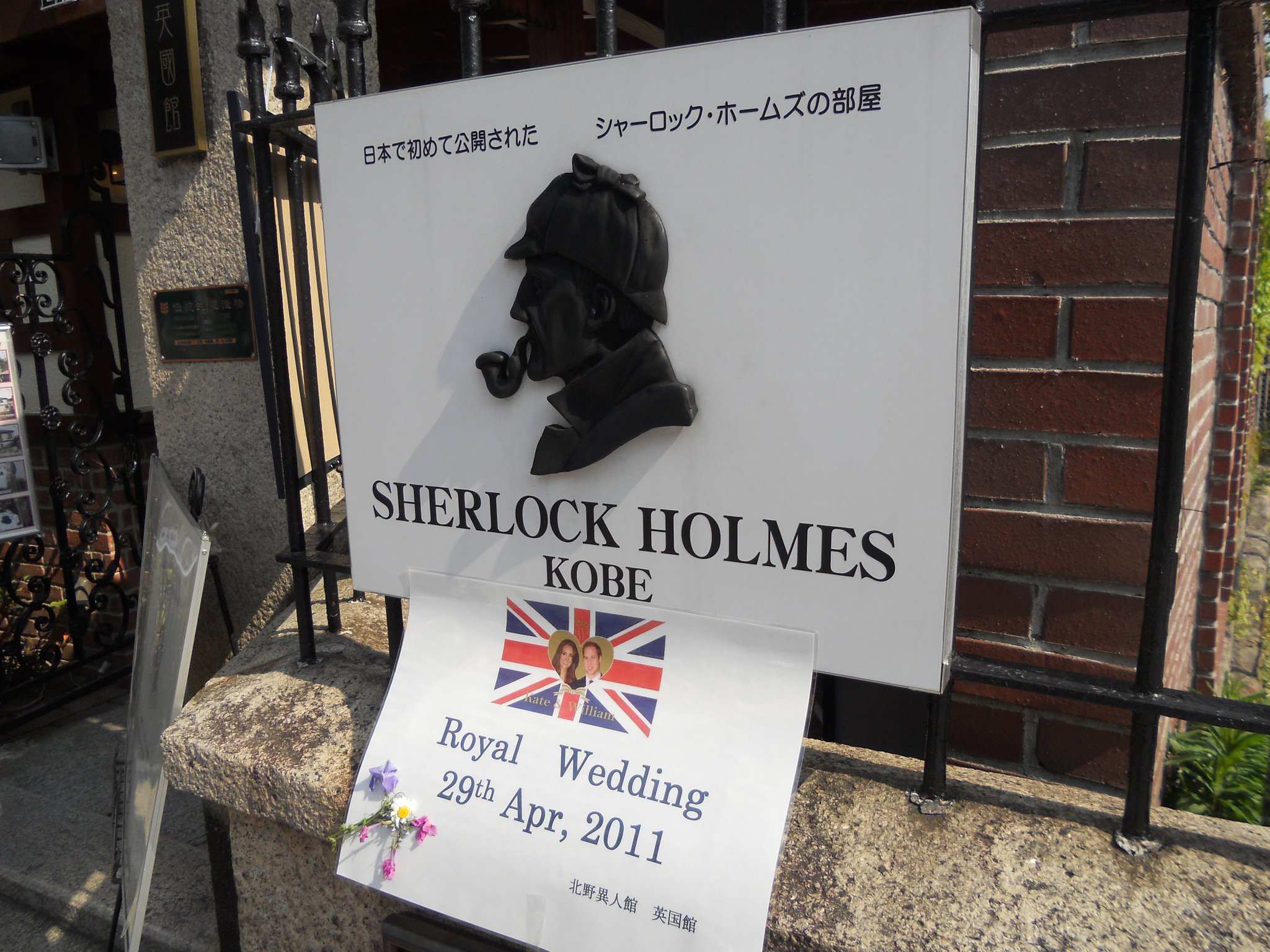
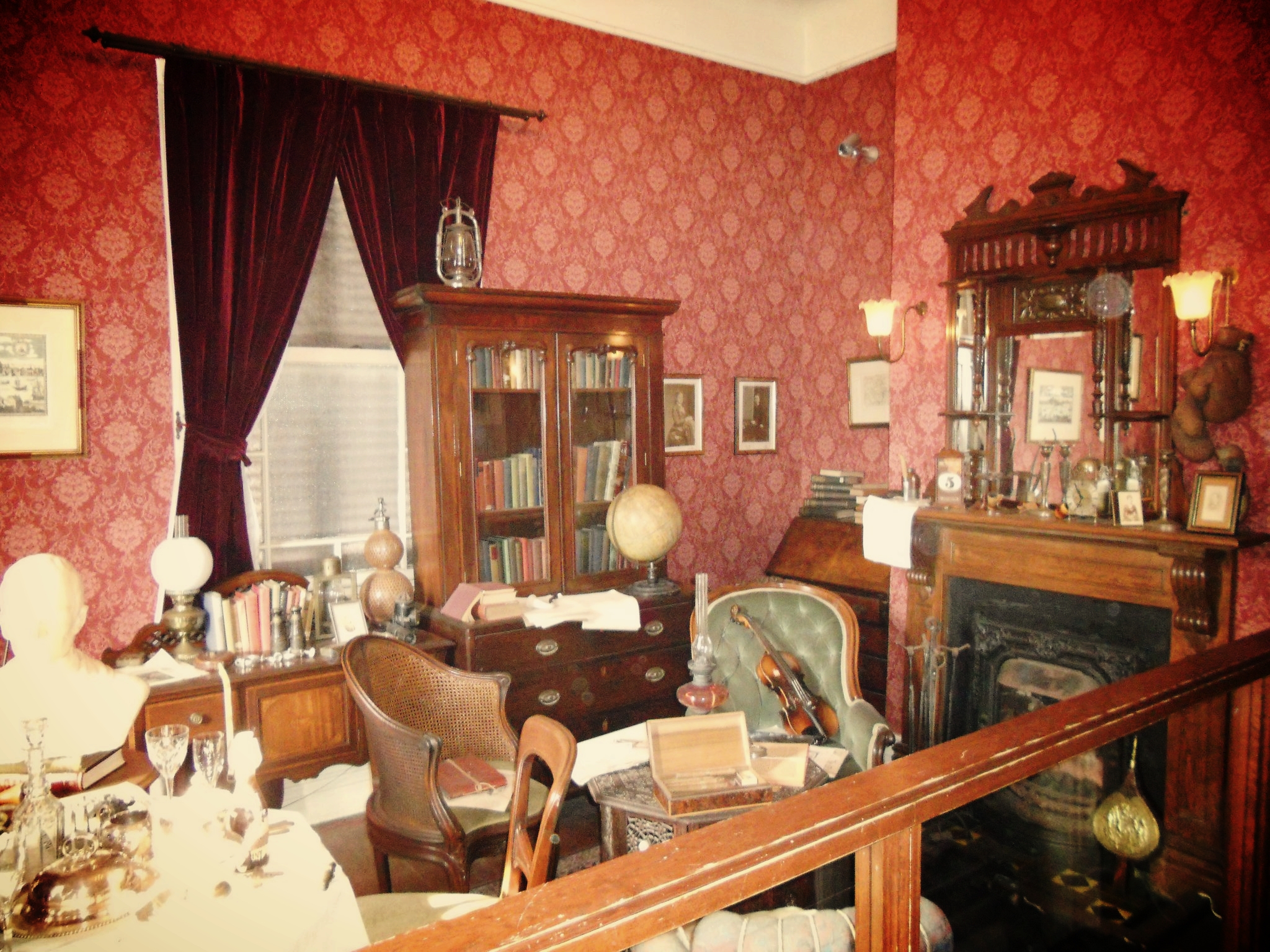
I’ve also been to the Sherlock Holmes exhibit in Kobe, Japan, which I visited in 2011, where the wedding of Prince William and Kate Middleton was also highly anticipated (as you can see in the photo below). The study was set up in a slightly different way than at the location in London, but I love how the wax doll of Sherlock Holmes was placed in the study at the Kobe location. Is Holmes peering out the window because he spotted something suspicious? Is he waiting for his next client?
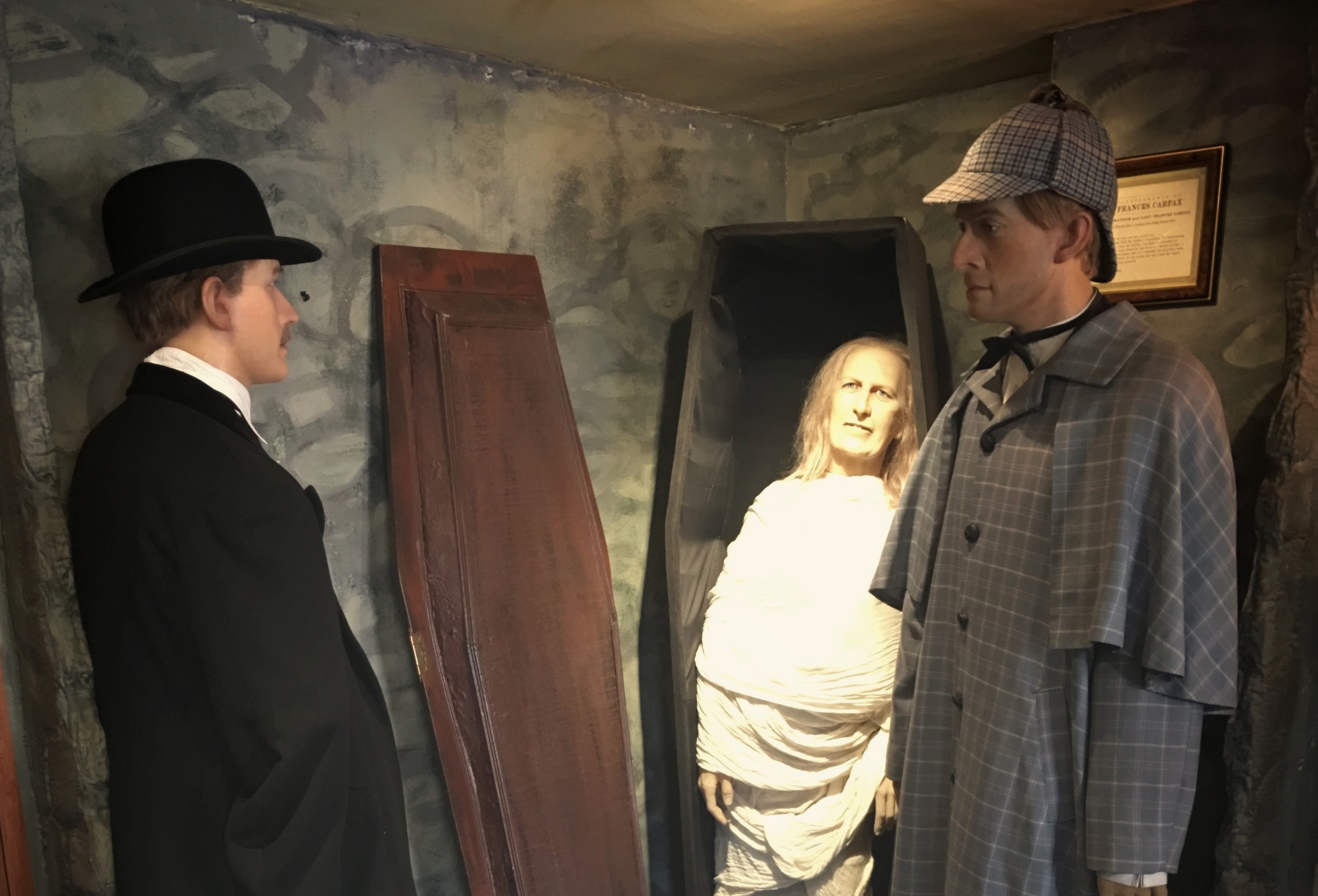
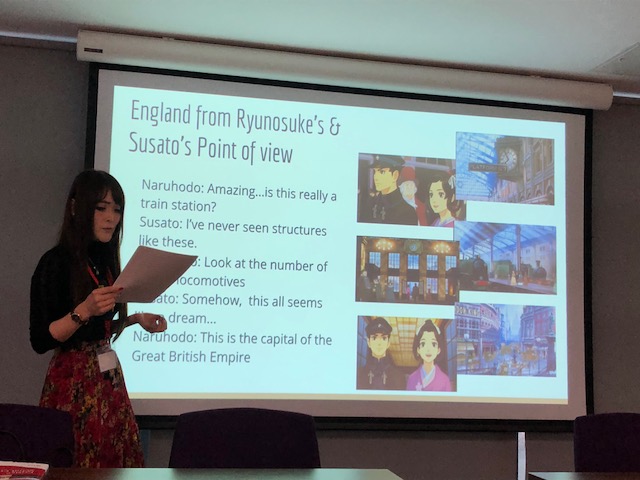
Upstairs in the London location, you’ll find a wax exhibit. I was most intrigued by the wax dolls of Holmes and Watson standing in the graveyard because it reminded me of a scene in a video game called Dai Gyakuten Saiban 2: Naruhodou Ryuunosuke no Kakugo (Great Turnabout Trial 2: The Resolve of Ryūnosuke Naruhodō), which adapts Doyle’s famous detective. It’s possible that the creators of the game had visited this museum (as well as Madame Tussauds), or it’s also possible that they utilized images of the museum(s) through online sources. Either way, it was cool to see how elements from the Sherlock Holmes Museum were integrated into a Japanese video game that not so many people know about (but now you do!). I presented a paper on this game at the British Association for Japanese Studies, which you can read about here.

Of course, all great tours end with a visit to the souvenir store (the so-called tourist trap), which I usually bypass at other museums, zoos and aquariums. Not this time. Like any fan girl, I felt like being in a candy store and at the end of the day, I paid for a watch, a book, a postcard and a pin as tokens to remind myself of my little adventure in Holmes’s abode.

BUT WAIT! Your adventure shouldn’t end here! Don’t forget to check out the bronze statue of Holmes and if you have time, go on a Sherlock Holmes tour, which you can find more information about here. There are many more attractions that you can indulge in, so here’s to many more fun adventures as you explore the world of Sherlock Holmes in London!

The game (is always) afoot!

To Sheffield and Beyond! by Mimi Okabe

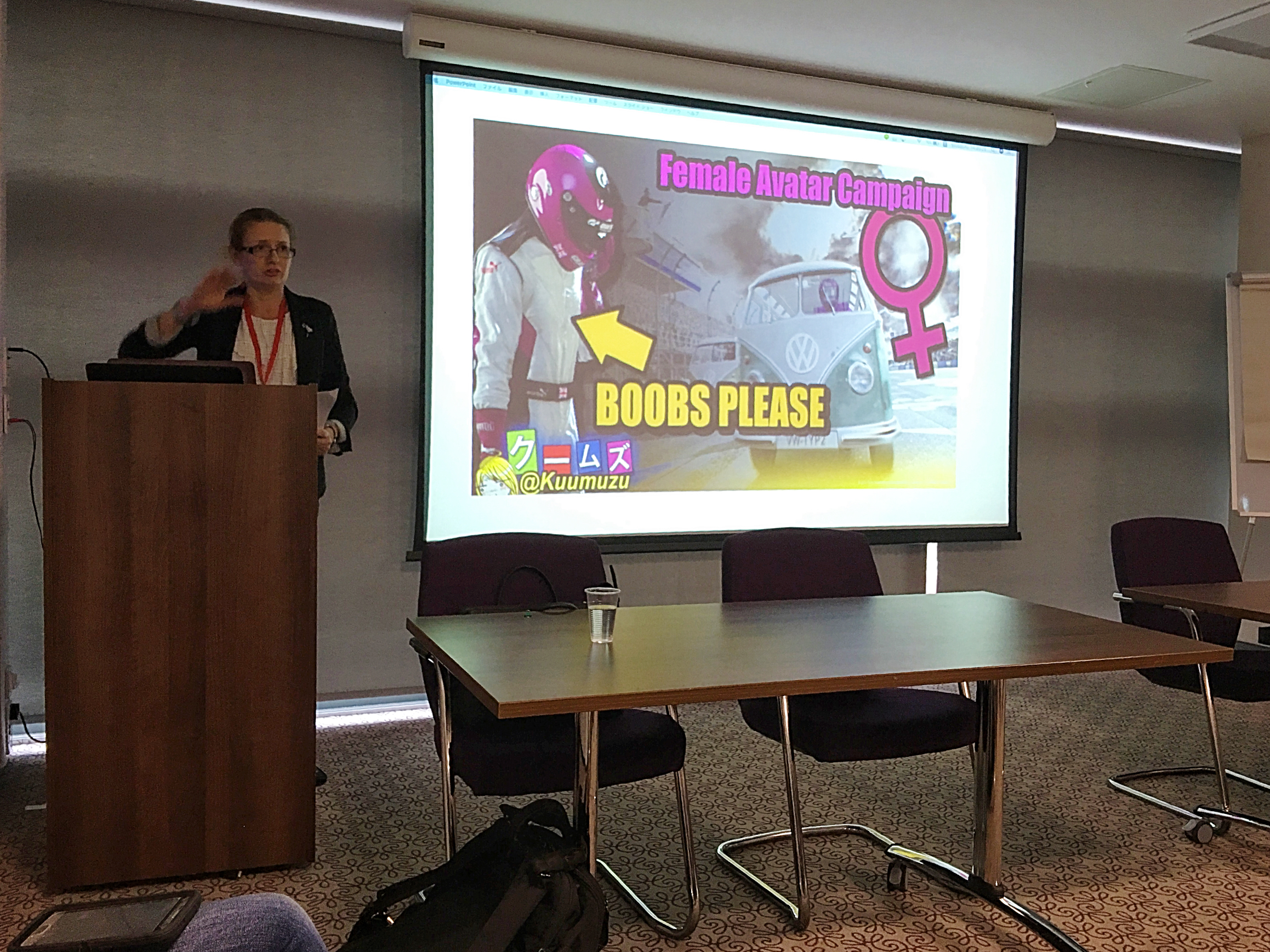
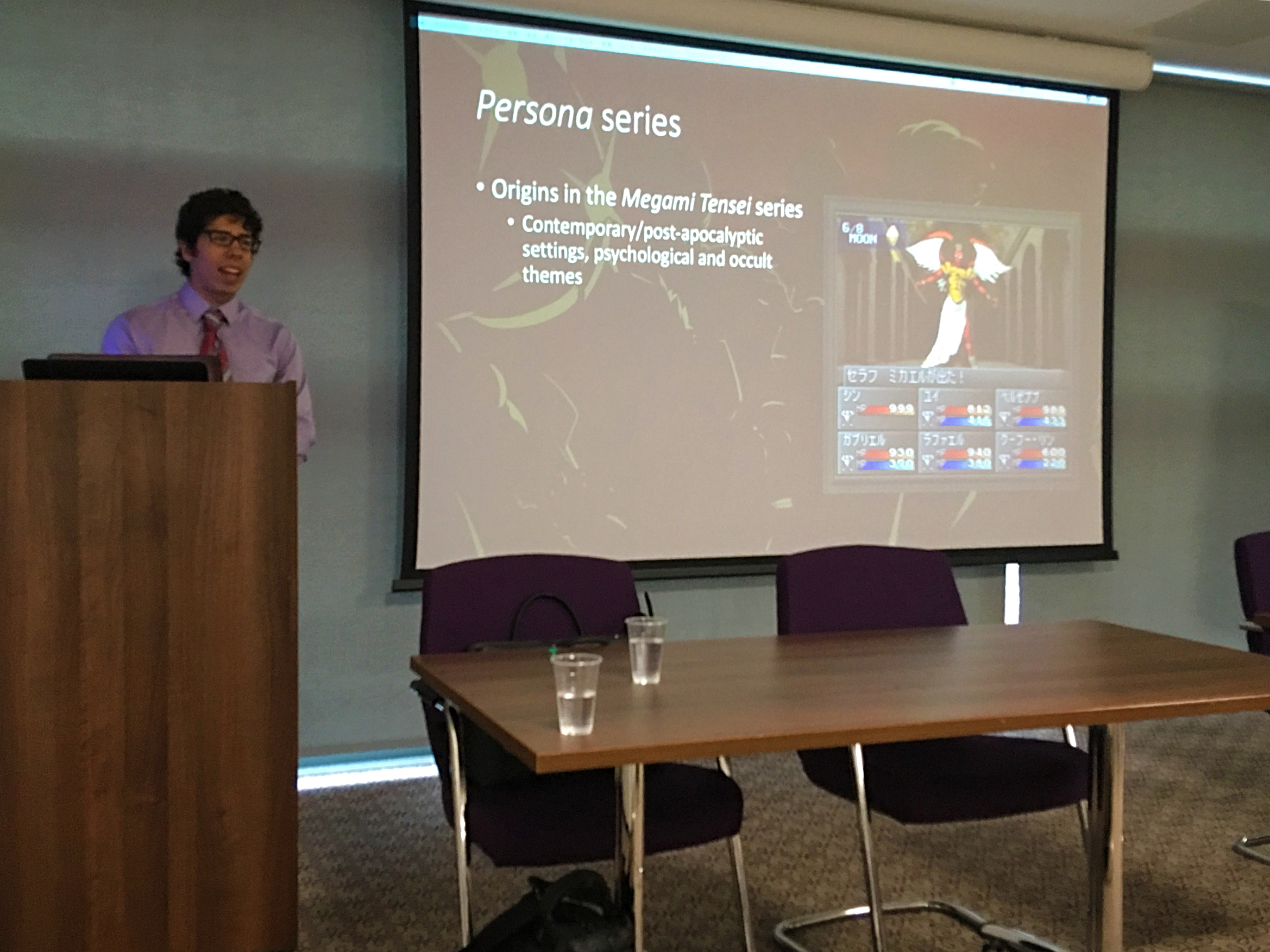
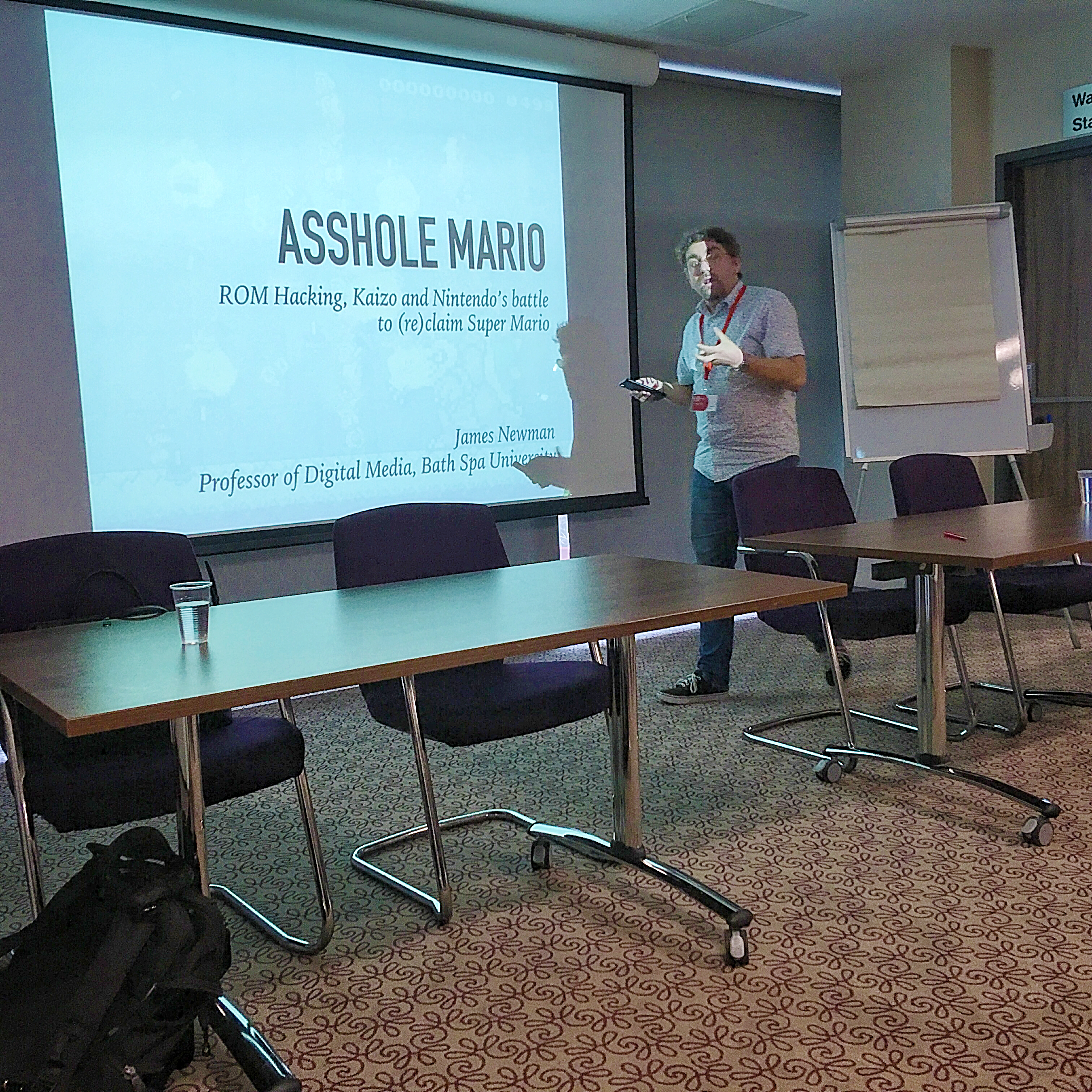
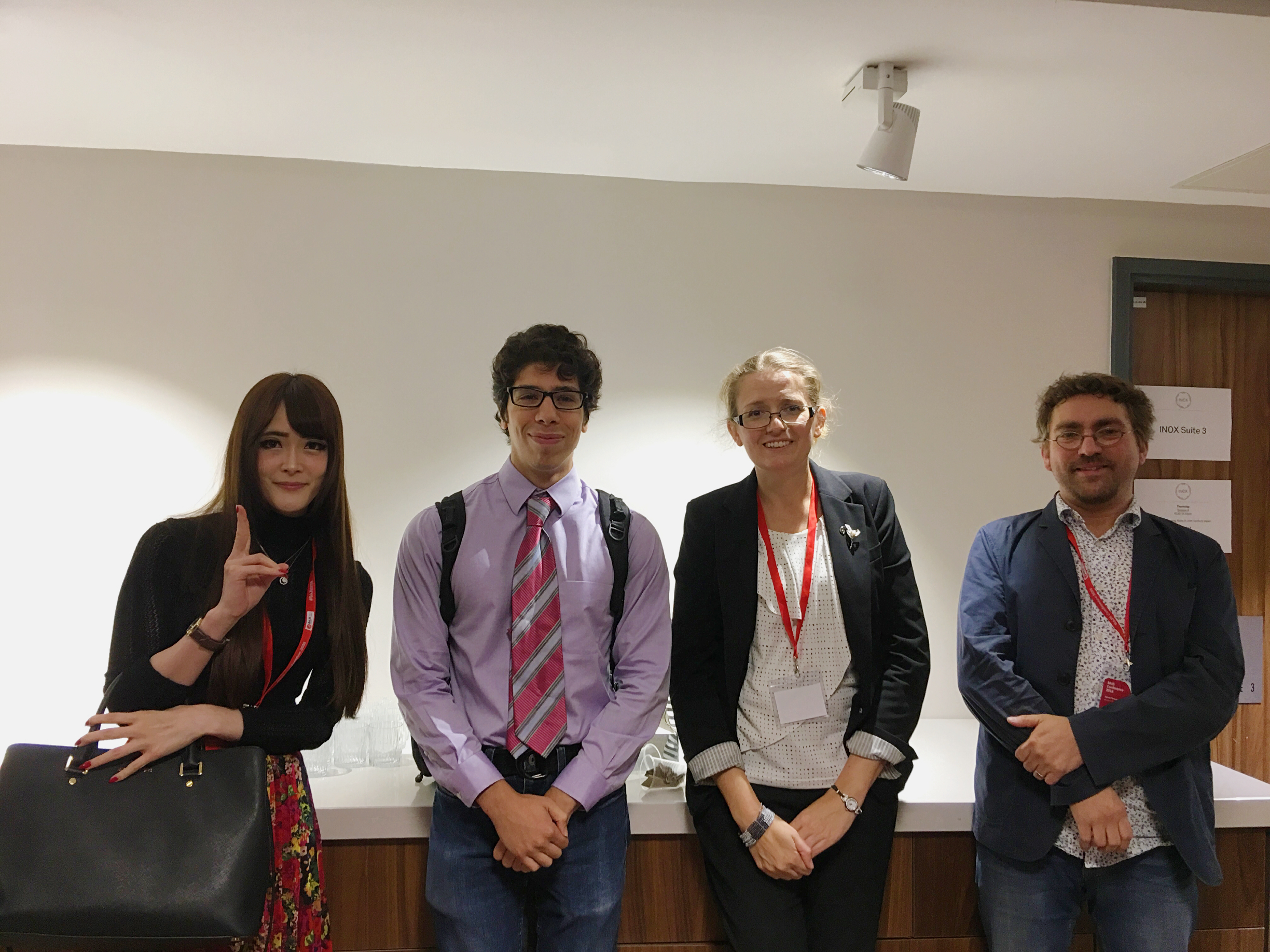
One week ago, I flew out to Sheffield, England to attend a conference organized by the British Association for Japanese Studies. The conference was held between September 5-7th, and it was my first BAJS conference. I met many friendly people there and made some great connections. What’s more, I was part of an amazing panel organized by Dr. Rachael Hutchinson and presented alongside Dr. James Newman and Frank Mondelli. In the spirit of Replaying Japan, our panel explored the conference’s theme (Crisis? What Crisis? Continuity, and Change in Japan) through various critical interpretations of Japanese video games. Scroll down to see what our panel was about!

IMG_2453.JPG

Aside from our panel, what I particularly liked about the conference were the keynote presentations by Dr. Gennifer Weisenfeld and Dr. Yoshitaka Mori who delivered very different, but informative discussions about how crisis is represented in Japanese visual culture and media, and its relationship to wider national/political discourses. I learned how “disasters are opportunities for radical change and profit” and that “crisis produces new markets using fear as a mobilizing force” as explored in Dr. Weisenfeld’s talk on boukuu domesticity. According to Dr. Yoshitaka, one site of crisis in Japan today is democracy, as he explained how it is associated with leftism and radicalism, which I find quite alarming. The Q & A session facilitated by Dr. Christopher Harding added critical depth and insight to the discussions as well.

IMG_2449.JPG

In addition to the keynote speakers, I was impressed by the sheer diversity of panels that explored crisis in Japan in so many different ways. Panels that caught my eyes ranged in topics from “Portrayals of Queerness in Popular Culture and the Potential Dangers of New Queer;” to “Generative Fictions: Representations of Pregnancy in Modern Japanese Literature and Manga;” to “The Kimono and its Industry in 21st century Japan--Tales of Crisis Change and Subcultural Appropriation;” to “Major Effects of Minor Changes: The Decision-Making Process under the Second Abe Administration.” I also appreciated the poster sessions that displayed the work of grad students in a really fun and interactive way.

Overall, my first BAJS conference experience was really great and I look forward to the next one.

For more information about the British Association for Japanese Studies, see here.

Thanks to the BAJS Council for the travel bursary.

Stay tuned for my next blog about my encounter with Sherlock Holmes…

In case you missed it here’s our panel abstract:


“This panel examines the Japanese video game industry from the perspective of cultural content and game design, showing how creativity in characterization, world-building and level of difficulty can lead to social critique and industry innovation. Mimi Okabe first analyzes popular titles from the Phoenix Wright (Gyakuten Saiban) series, demonstrating Japan’s ongoing crisis of identity from Meiji to the present, situating Japan on the axis of Orient-Occident and problematizing the imperial past of both England and Japan. Frank Mondelli examines ideology and social critique in Persona 5, set in a politically corrupt contemporary Tokyo in which the player-character must act as an ethical individual to progress. Rachael Hutchinson shifts the discussion to matters of genre, asking which video game genres are more conducive to social or political critique. Racing and fighting games are set against roleplaying, tactical and strategy games, all of which deliver nationalistic or counter-discursive ideology in different ways. Finally, James Newman considers Nintendo’s response to fan creativity in the production of Kaizō game levels in Super Mario Maker – impossibly difficult hacks which could have caused a crisis for Nintendo’s friendly image. Newman demonstrates that Nintendo, far from being a slow monolith incapable of change, seized the opportunity to counter the crisis with corporate flexibility, ultimately reinforcing its own design principles. Together, the papers in this panel aim to show the Japanese game industry as a creative force for social critique and fan engagement, a dynamic site for exploring and problematizing crisis in contemporary Japan” (British Association for Japanese Studies Conference 2018, p. 45).


What are Some of your Best Memories of Food?! by Mimi Okabe

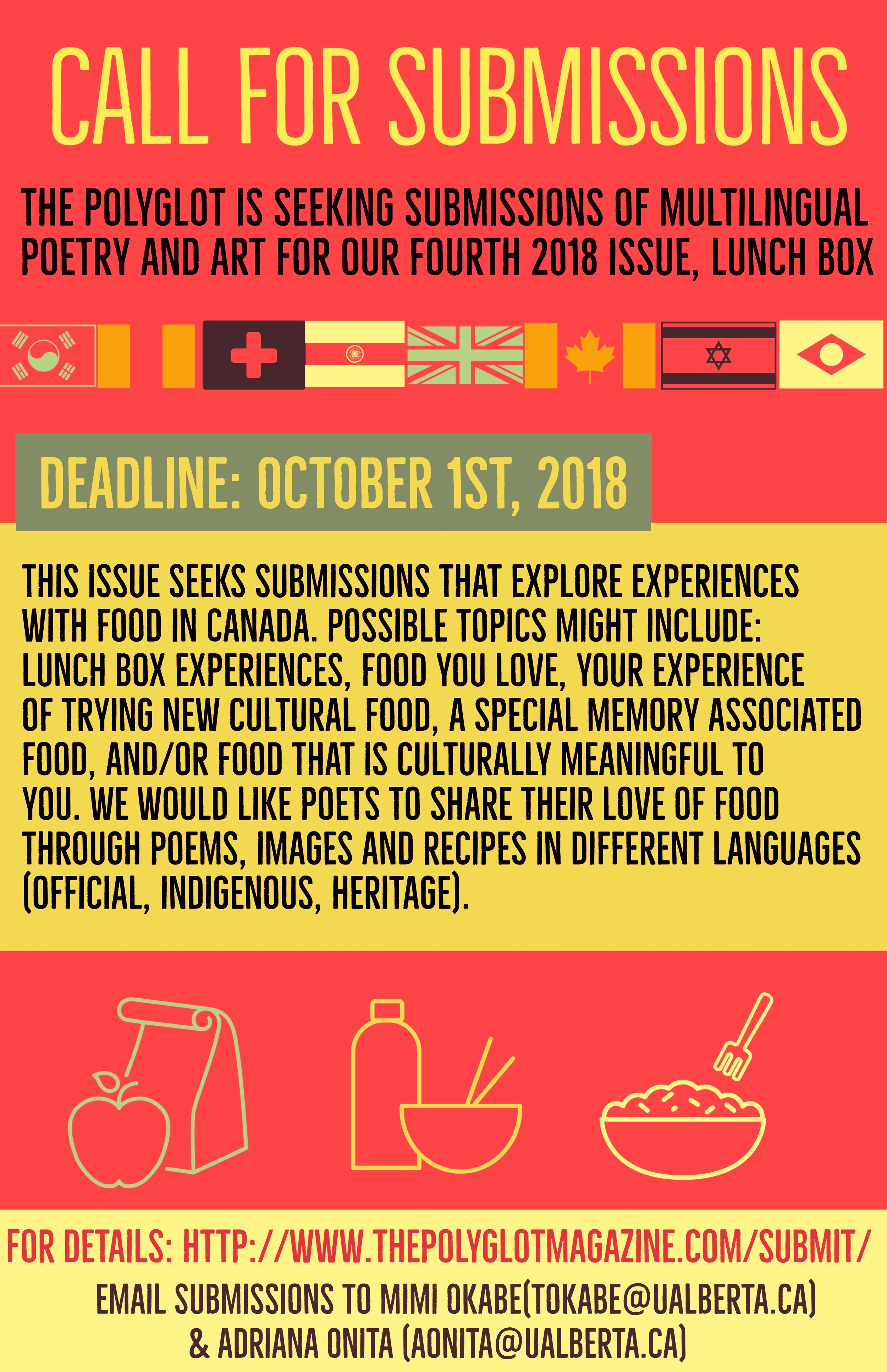
Polyglot 2018 Fall. Call for Submission. Poster. revised..jpg

This is for all you foodies, and people who just love food!

I am so honored to be the guest-editor for the 4th issue of The Polyglot to celebrate Canada's multiculturalism through food!! As a foodie, this issue is like a dream come true! Consider submitting a poem, recipe and an image that captures your best, favorite, most memorable experiences with food! See the full Call on The Polyglot website!

This is a general Call, meaning you don't have to be an academic or food expert to submit something! We are looking for fun and creative submissions! We also accept and encourage submissions in ANY language! Everyone is welcome to submit! (pointing my fingers at fellow foodies!)